


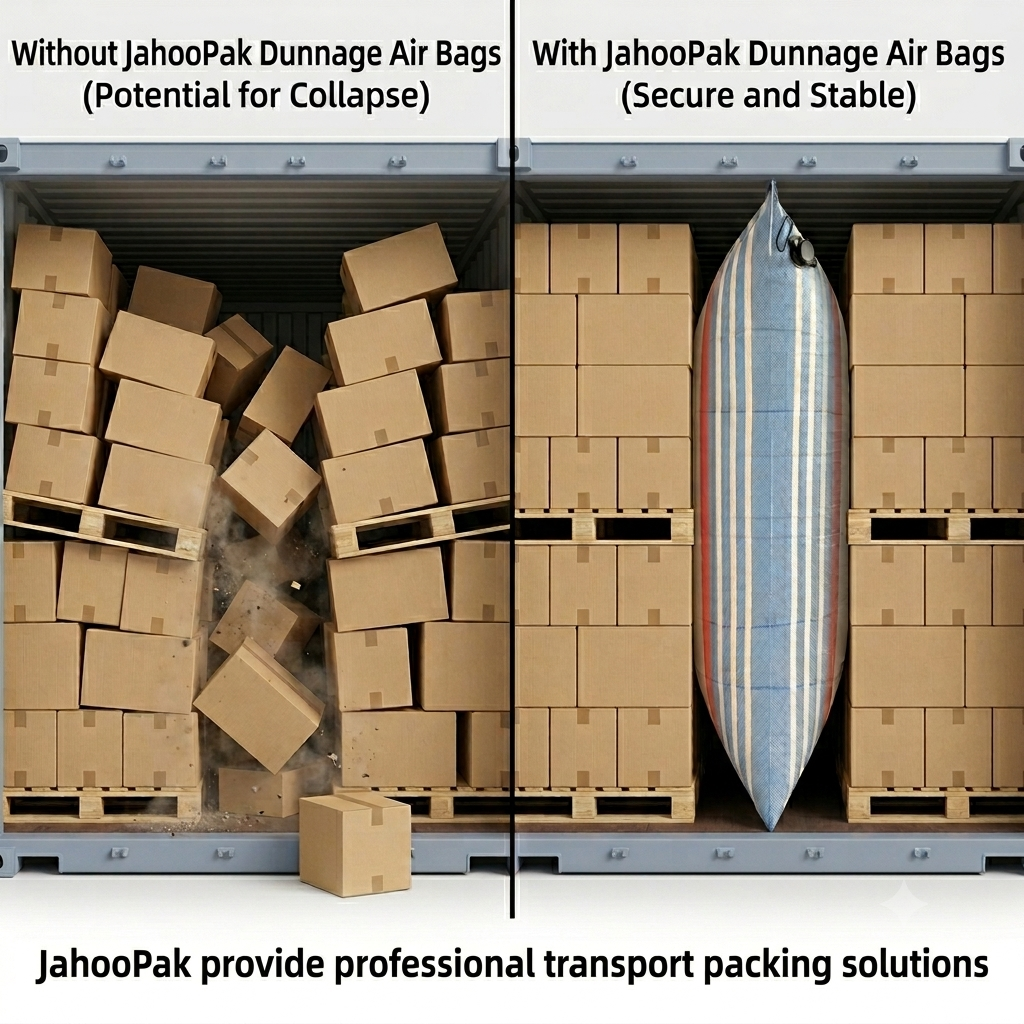
Our PP woven dunnage air bag adopts dense weaving structure, which effectively improves the overall tear strength and abrasion resistance. The surface of the woven fabric is designed with non-slip rough texture. When the bag is inflated and squeezed between cargo stacks, the friction force increases significantly to avoid lateral sliding and offset of stacked goods. We supply multiple optional inflation valves according to customers’ different operation habits, including fast fill valve and standard one-way valve, to match different air pumps and air compressors. All finished bags are folded neatly, sorted and packed into export cartons. We support customized width, length and printing service. Serial numbers, barcodes and customer logos can be printed on the surface for cargo traceability. It is a reliable void filling solution for pallet cargo in container logistics.
- How to properly inflate and deflate kraft paper dunnage air bags for container cargo packing?
- Inspect the Void and Cargo: Before inflating, measure the space between cargo pallets and check for sharp corners, burrs and pointed scraps that may damage the kraft paper surface. Put the kraft paper dunnage air bag in the middle of the void.
- Position the Bag Correctly: Height alignment. Keep the top of the bag even with or a little higher than cargo. Use protective sheets if the bag is close to rough pallet wood edges.
- Connect the Inflation Tool: Pneumatic equipment. Fasten the inflator gun or air hose tightly onto the one-way valve. Control the compressor pressure within the safe PSI range.
- Inflate to the Recommended Pressure: Monitor PSI. Add air slowly until the bag fills the gap and locks cargo against the container wall.
- Verification: Confirm the bag feels tight and does not bulge out from the gap.
PRODUCT DIMENSIONS

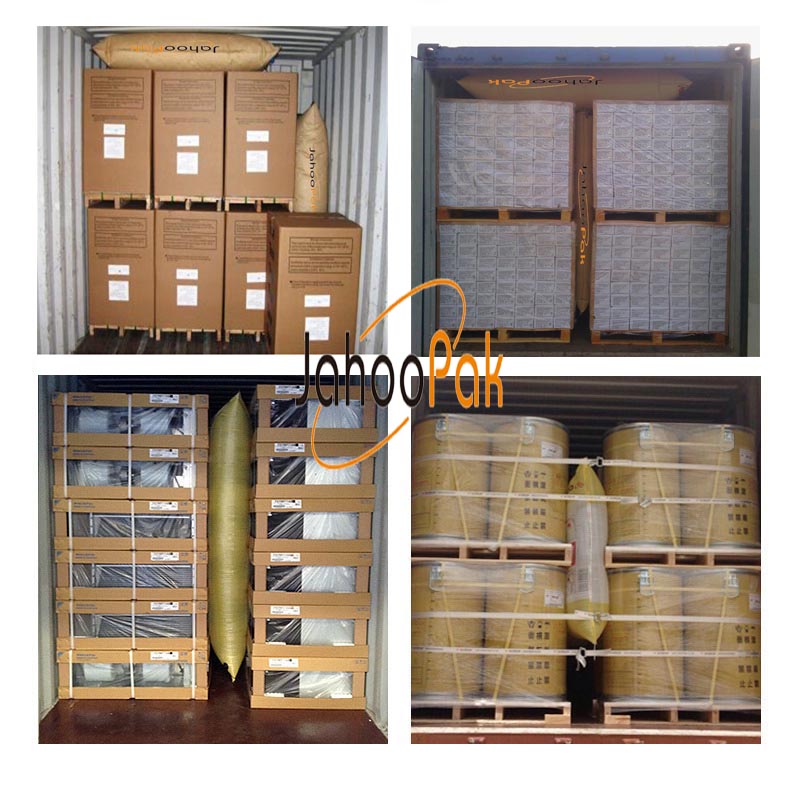
SCENE IMAGE
COMPETITIVE ADVANTAGES


PACKAGING & SHIPPING SPECIFICATIONS

PRODUCTION WORKFLOW

COMPANY OVERVIEW


