Details About Paper Air Dunnage Bag:
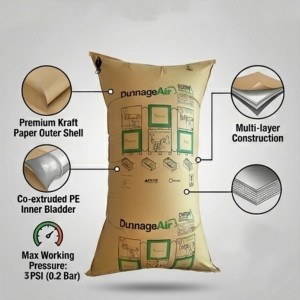
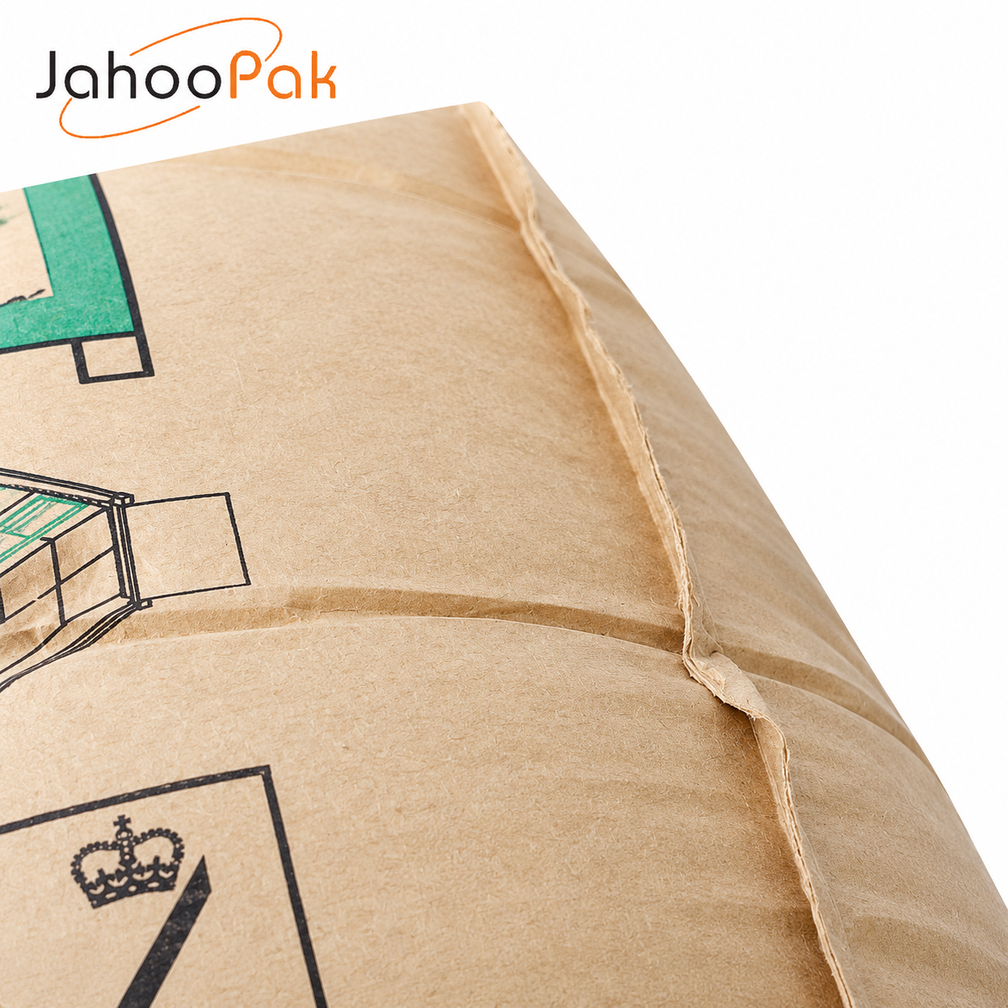
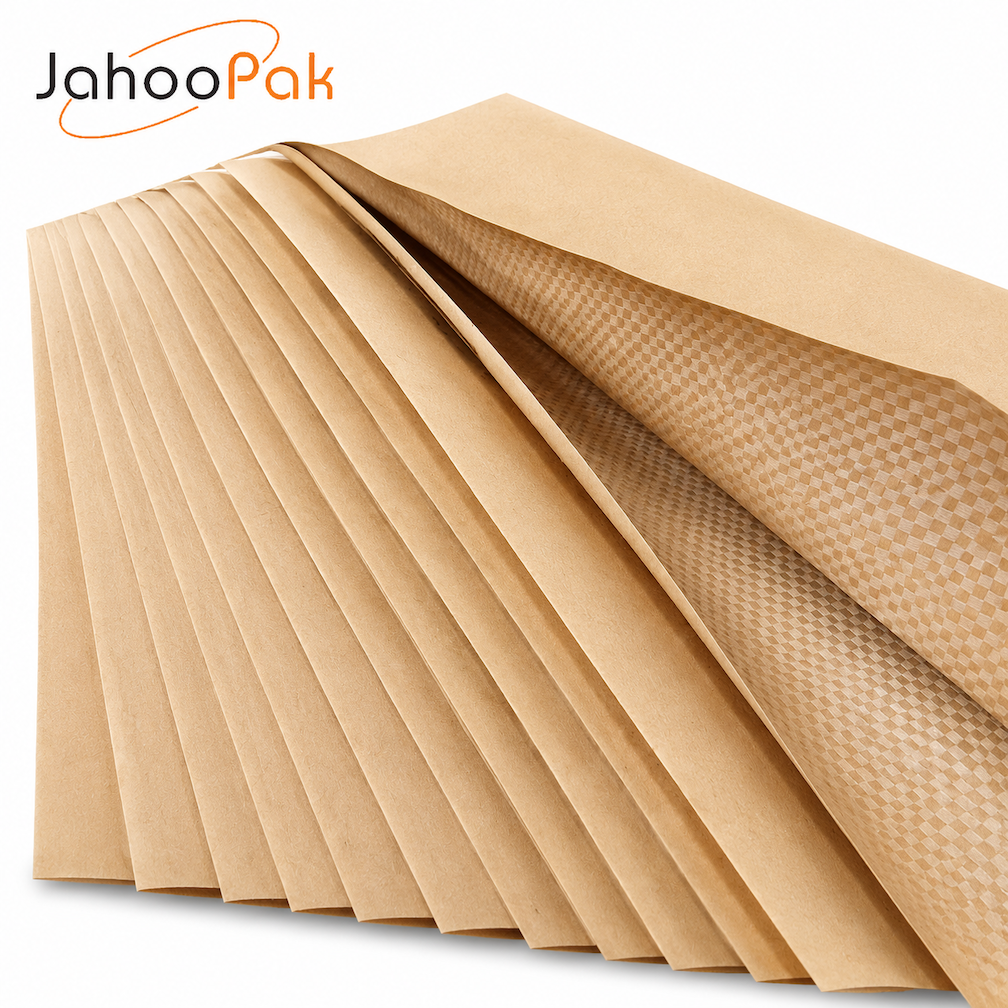
Raw kraft paper sheets for this disposable dunnage bag receive thickness consistency inspection at material receiving station. Multi‑ply hot‑lamination procedure bonds paper layers together; operators discard laminates showing bubble or delamination defects. Inner PA‑PE membrane rolls go through surface defect scanning before thermal‑seal assembly. Each finished unit gets individual air‑tightness pressure probing test. Qualified goods are flat‑folded and grouped into export‑grade cartons ready for distribution to export‑oriented manufacturing clients.
How To Use Dunnage Air Bags
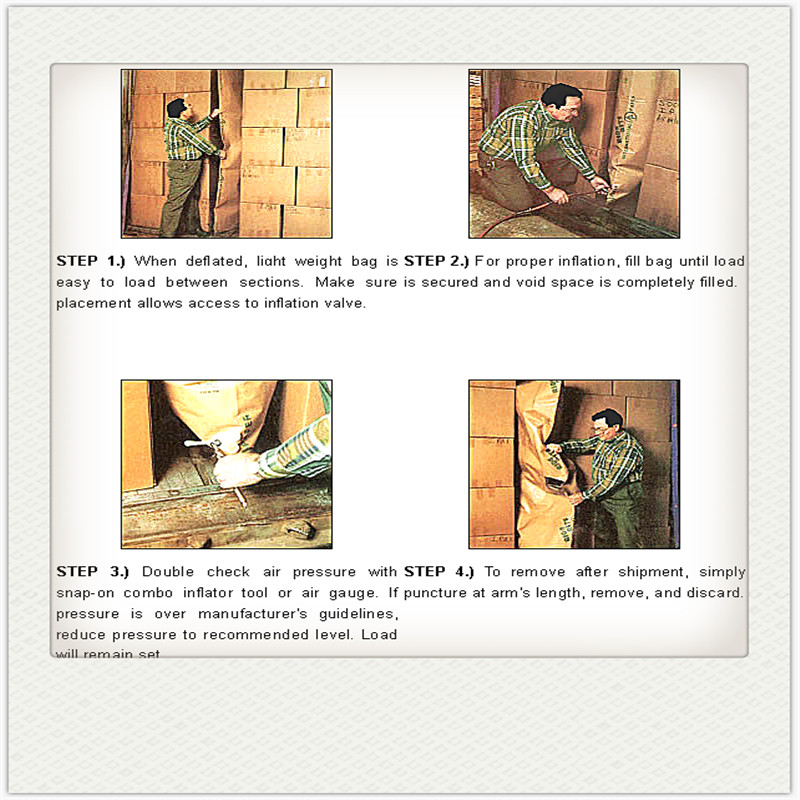
i Step by Step Operating Instructions
- Place the deflated kraft bag into cargo gaps: Slide the flat, deflated kraft paper dunnage bag into the empty space between cargo stacks. Make sure the inflation valve faces outward, so you can easily connect the inflator later. Do not fold or twist the bag body when placing it. Keep the valve fully accessible for follow-up inflation work.
- Inflate the bag to fill the void completely: Connect your inflator gun to the one-way valve and start filling air slowly. Keep inflating until the cargo is tightly braced and the whole gap is fully filled. Do not rush the inflation process, otherwise uneven pressure may cause local damage to the kraft paper outer layer.
- Recheck working pressure with gauge tool: Use snap-on combo inflator or independent air gauge to double check the internal pressure. If the reading exceeds the manufacturer recommended limit, release air gently to reach the safe working pressure. Once adjusted properly, the cargo will stay stable during ocean or rail transit.
- Dispose of the bag after shipment arrival: When you unload cargo at destination, puncture the kraft bag at arm’s length to release air. This kraft paper model is single use only. After deflation, collect and discard the bag. Do not reuse it for new loading tasks.
Popular size:
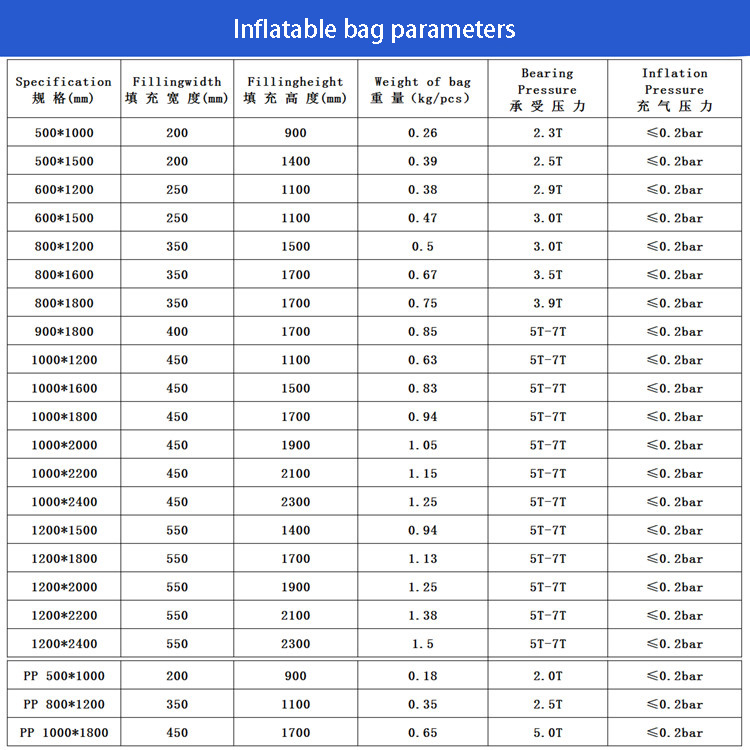
Parameter Table Helps You Select the Right Kraft Paper Dunnage Bag Size
This parameter table lists the main specifications of kraft paper dunnage bags and PP woven dunnage bags. Each size is clearly marked with filling width, filling height, weight, bearing pressure and inflation pressure. For kraft paper bags, buyers can use the filling width and filling height to choose the most suitable size. The filling width is the maximum gap that the bag can fill after inflation. The filling height is the vertical height available to support cargo. Selecting the correct size helps avoid loose support or over inflation problems.
Different Levels:
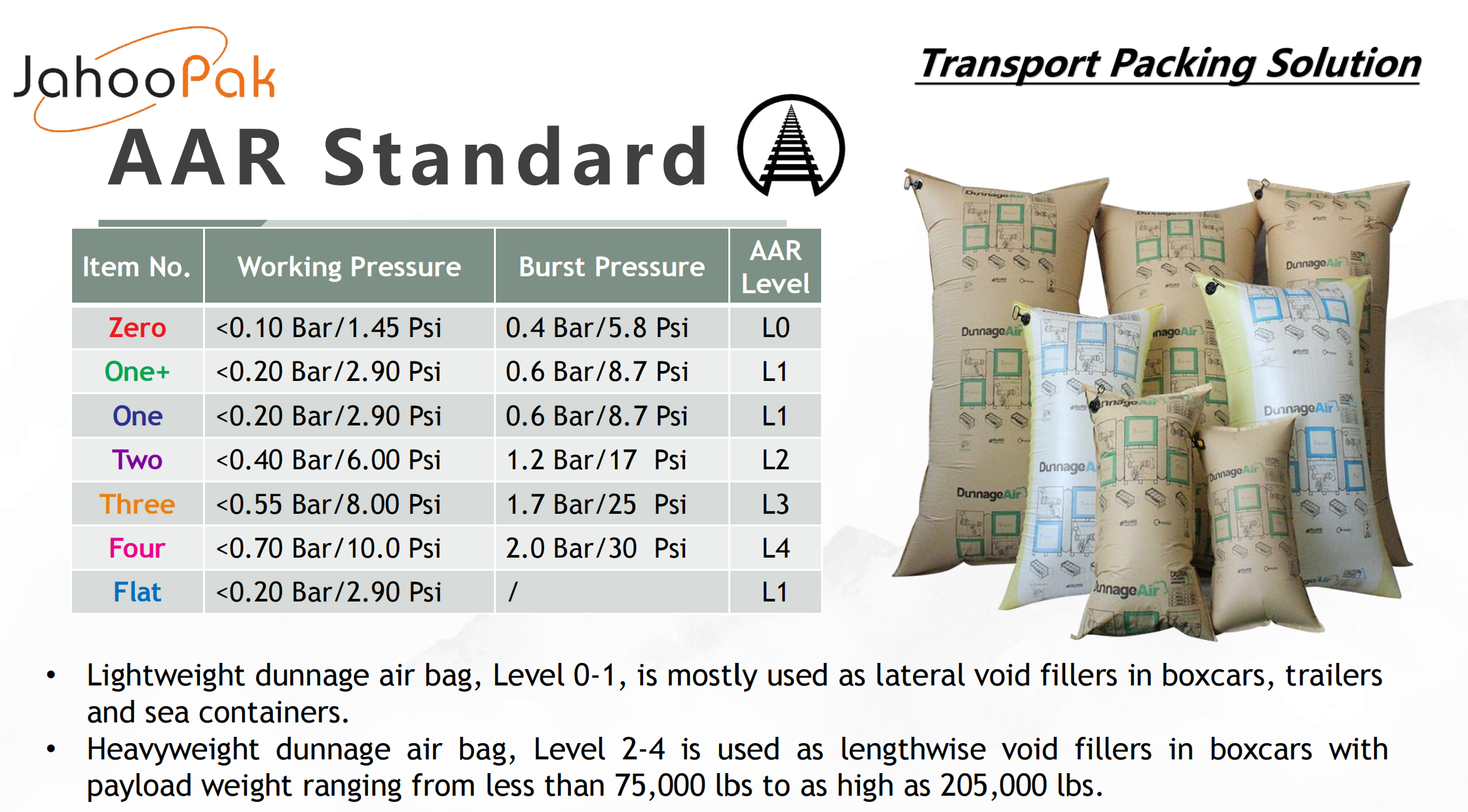
AAR Standard Defines Safe Pressure Limits for Dunnage Bags
The AAR standard classifies dunnage bags by working pressure and burst pressure. This classification helps users select the right bag for different transport conditions. Lighter grades such as Zero, One+ and One are suitable for lower thrust scenarios. Heavier grades such as Two, Three and Four are designed for stronger impact forces. The table also shows the safety margin between working pressure and burst pressure. This margin is important because temperature changes and cargo impact can raise internal pressure during transit.
Specification:
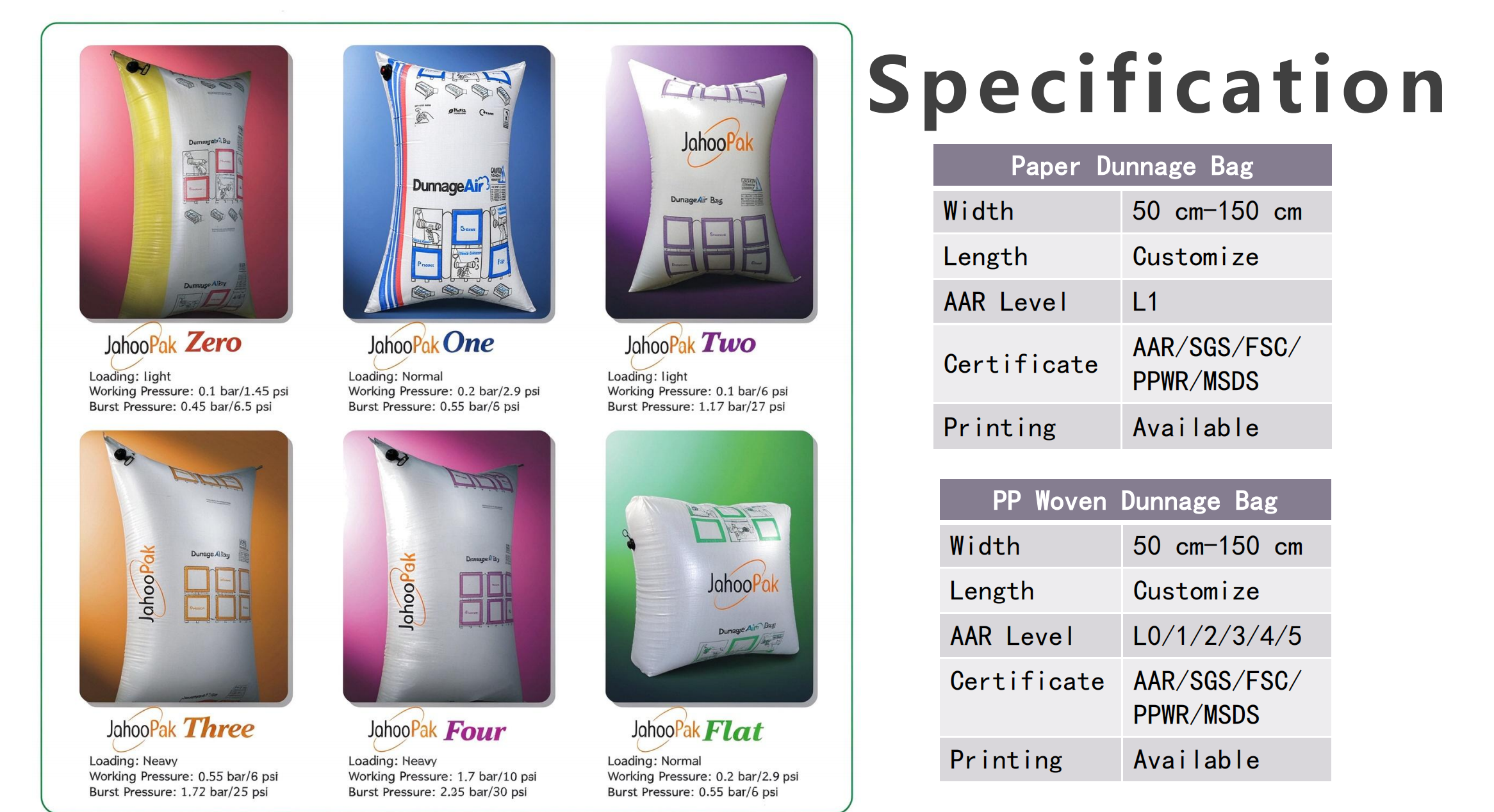
Two Main Dunnage Bag Types for Different Shipping Needs
This specification chart introduces two main dunnage bag categories: paper dunnage bags and PP woven dunnage bags. Paper bags are usually used for one way export shipments. PP woven bags are more durable and can be reused multiple times. Both types are available in different widths and lengths. Customers can choose according to their transport mode, cargo weight and budget. Paper bags are a good choice for standard FCL loading. Woven bags are more suitable for repeated circulation routes.
Inflation Tools:
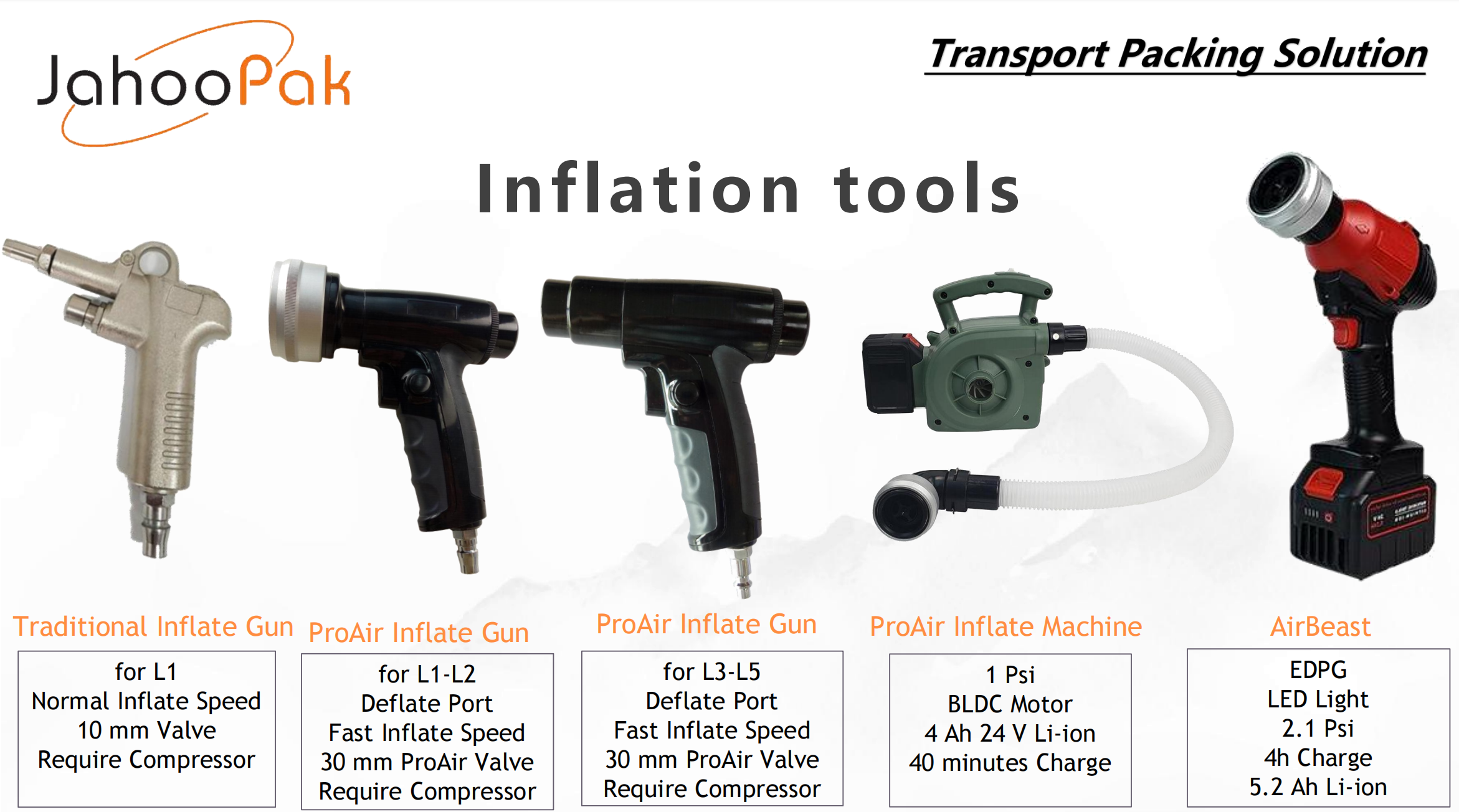
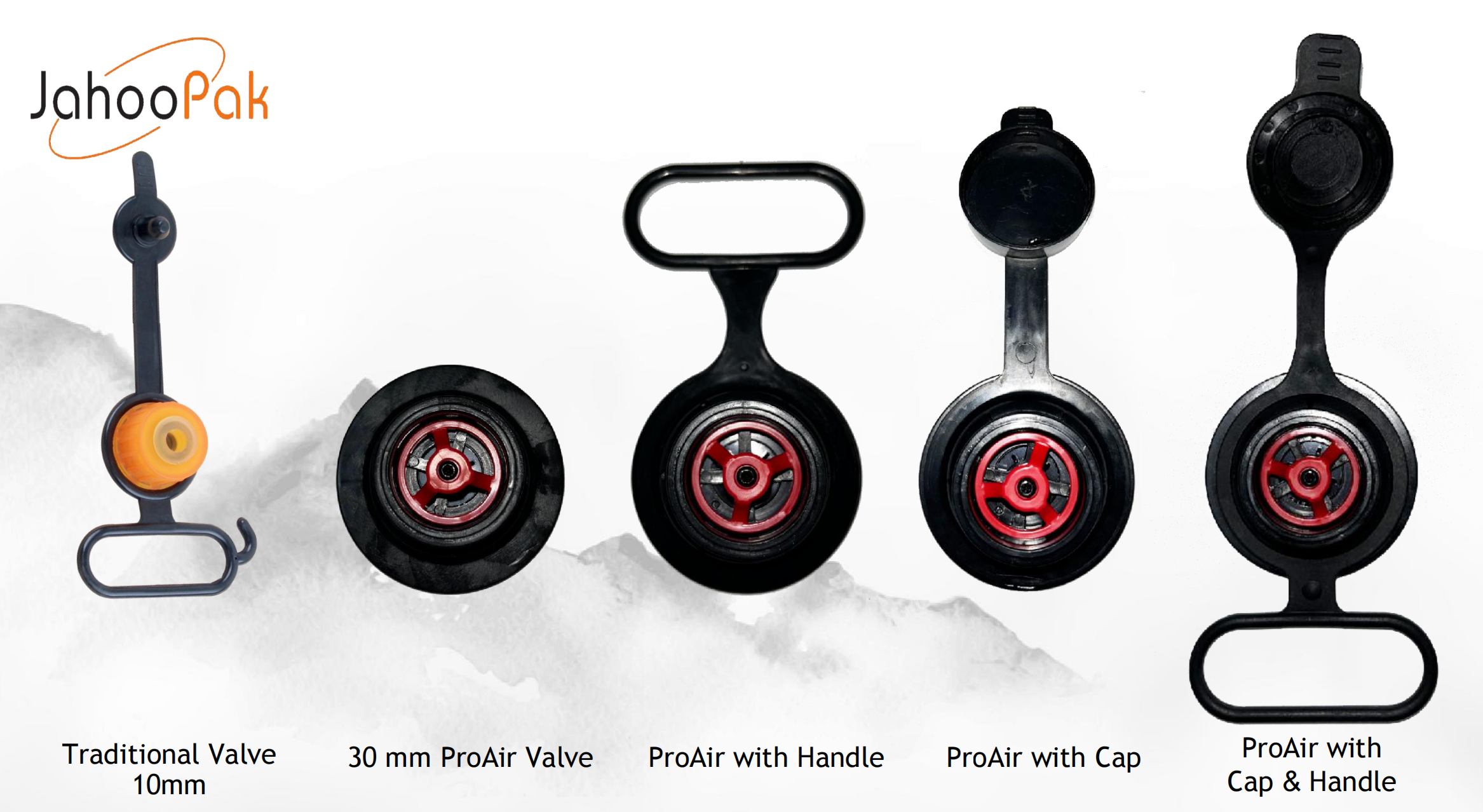
Inflation Tools and Valves Must Be Matched Correctly
Dunnage air bags work with different inflation tools and valves. Using the right combination is important for fast and safe inflation. Traditional 10 mm valves usually connect with standard inflate guns. ProAir valves need ProAir inflation tools. If the nozzle and valve do not match, air may leak during filling. Staff should check the valve type before starting container loading. Matching tools and valves improves work efficiency and reduces pressure errors.
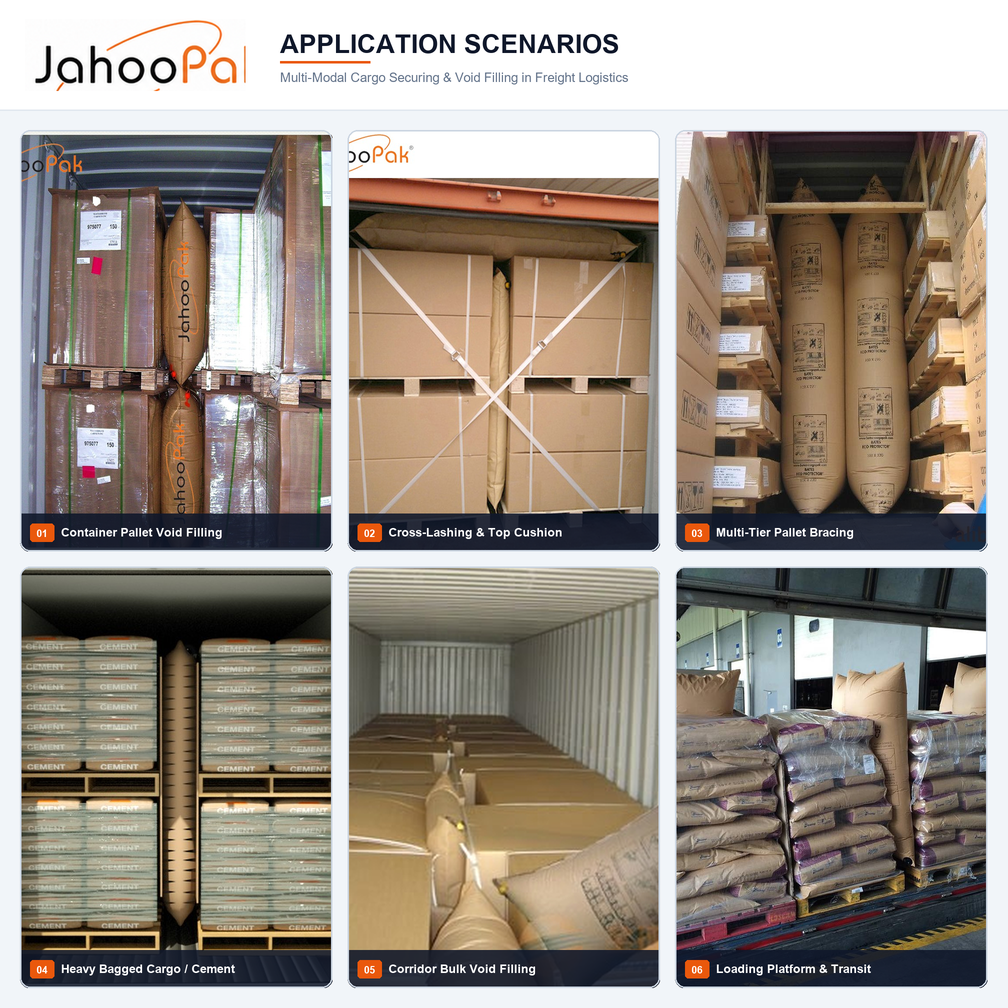
Application: