Product Detail
Product Tags
Details About Paper Air Dunnage Bag:
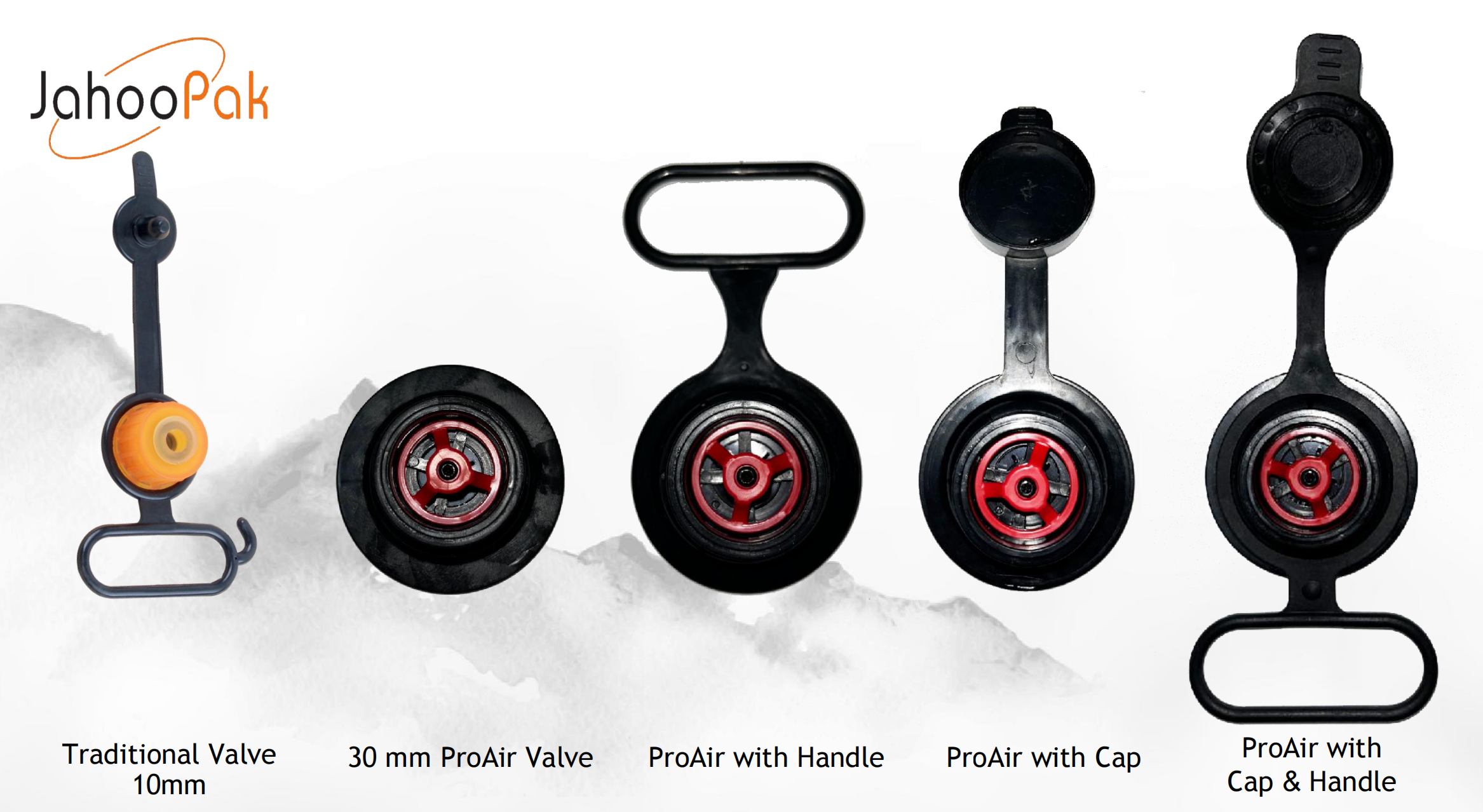
The integrated one‑way valve for kraft paper dunnage bag is pre‑calibrated for single‑trip working‑pressure scope. Valve‑paper joint area receives enhanced peripheral hot‑sealing treatment to minimise risk of joint‑interface delamination under inflation pressure. Valve geometry matches mainstream terminal inflator‑gun nozzle dimensions. No special adapter fittings are required for most common pneumatic tools used in container‑loading yards across global export hubs.
How To Use Dunnage Air Bags
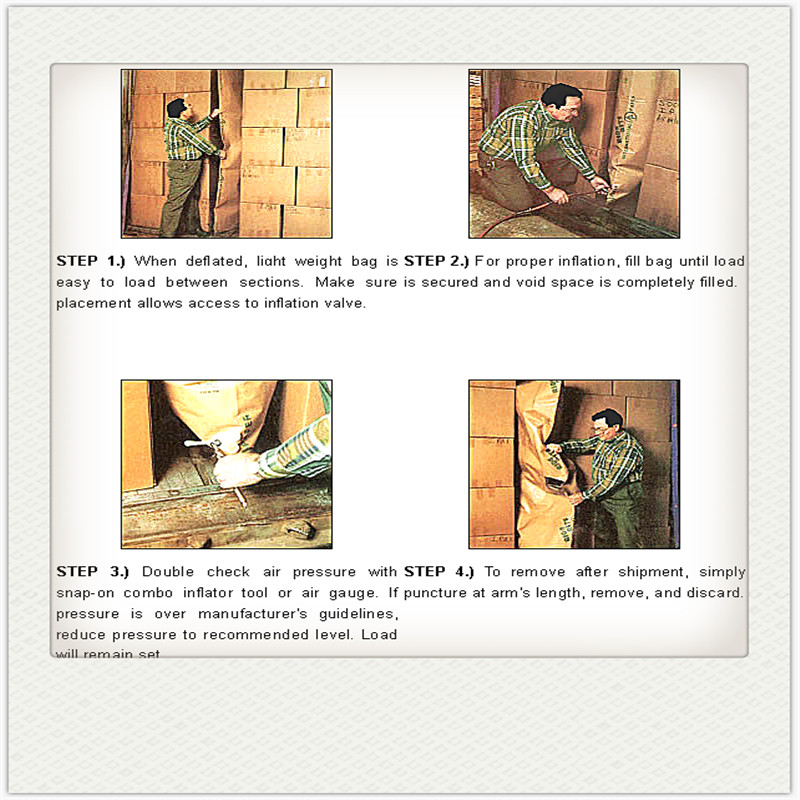
Step by Step Operating Instructions
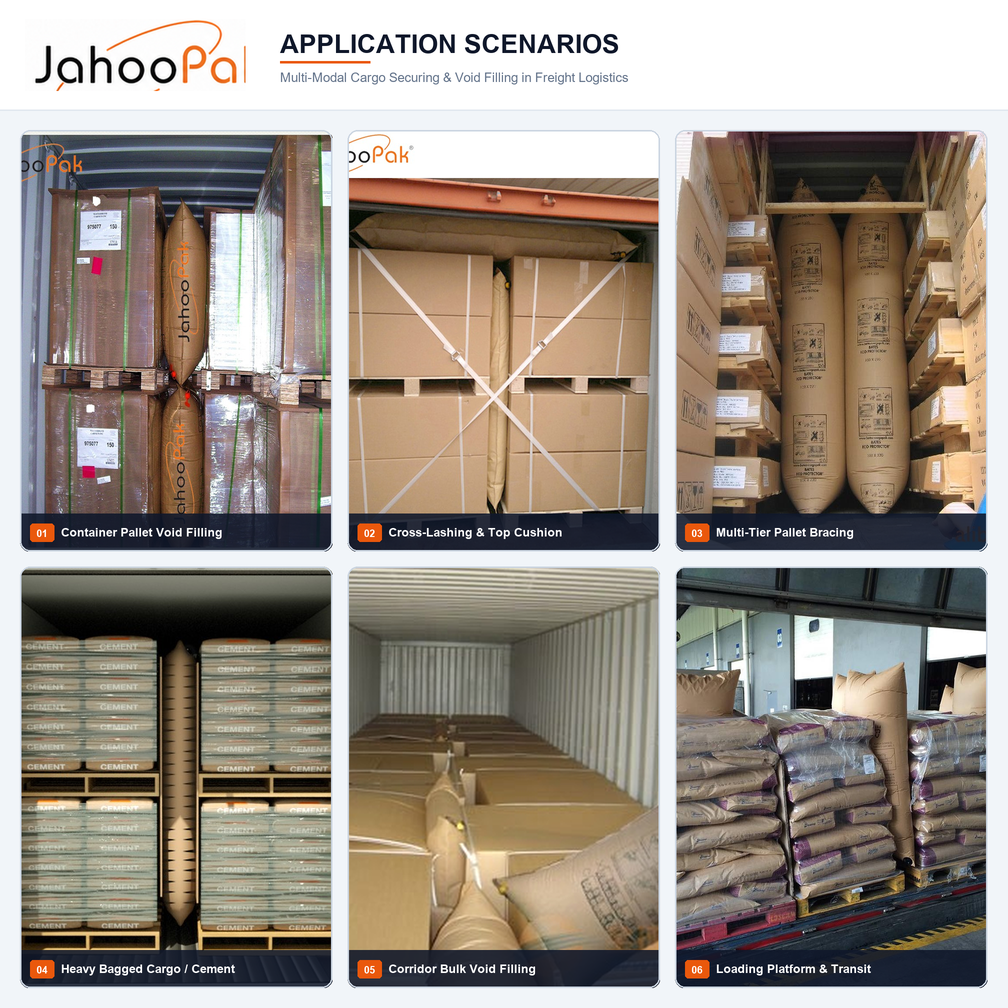
- Load the deflated bag into container voids: Unfold the flat kraft paper dunnage bag and insert it into gaps between palletized cartons. Always reserve access space for the inflation valve. Avoid squeezing the valve between cargo.
- Fill air steadily to lock the cargo: Attach the inflator nozzle to the valve and inflate step by step. Stop inflation once the load cannot shift and the void space is fully occupied.
- Verify pressure and adjust if overfilled: Carry out pressure inspection with matched air gauge. Any pressure value higher than the rated guideline must be reduced.
- Safely puncture and discard: At the receiving depot, puncture the used kraft bag from a safe distance to release internal air. Recycling or repeated inflation is not allowed.
Popular size:
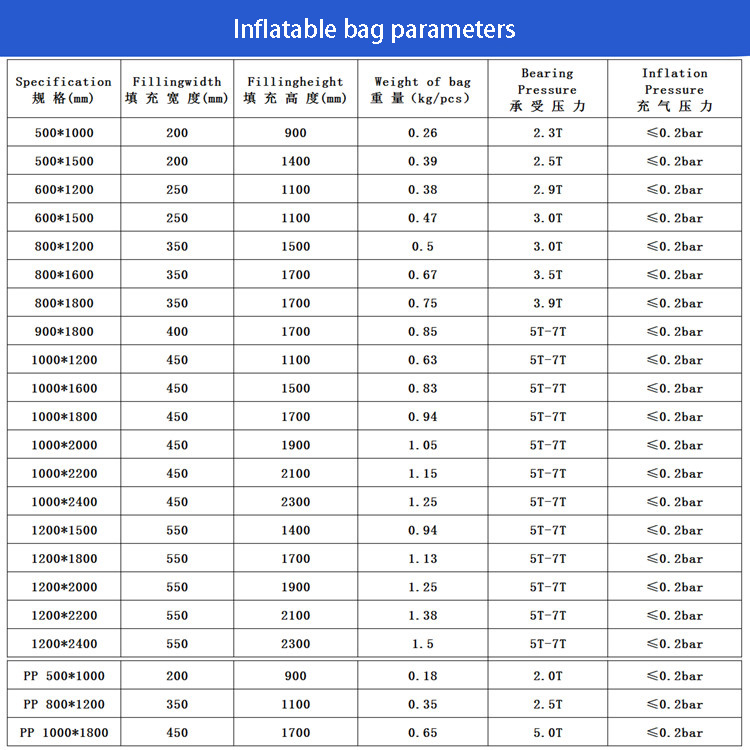
Filling Width and Filling Height Guide Gap Matching
When selecting a kraft paper dunnage bag, two parameters are especially important: filling width and filling height. Filling width tells you the largest gap the bag can cover after inflation. Filling height tells you whether the bag can reach the required vertical support area. If the bag is too narrow, it cannot stabilize the cargo effectively. If it is too short, the upper part of the cargo stack may still move.
Different Levels:
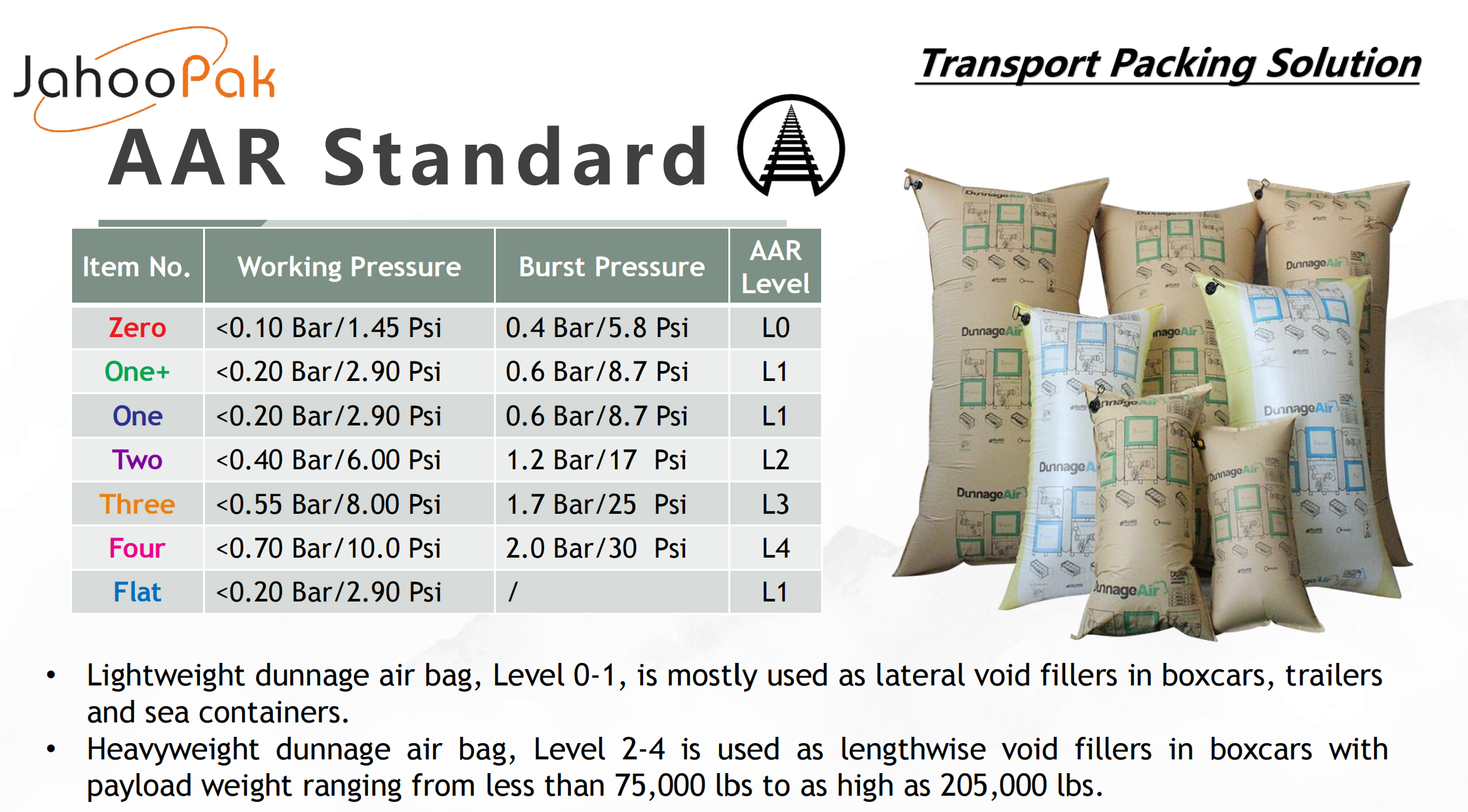
Light Grades Are Mainly Used for Lateral Void Filling
Lightweight dunnage bags in Level 0-1 are mostly used as lateral void fillers. They fit boxcars, trailers and sea containers where side gaps need to be stabilized. These bags can prevent cargo from sliding sideways during transport. They are suitable for general merchandise, cartons and medium light palletized cargo.
Specification:
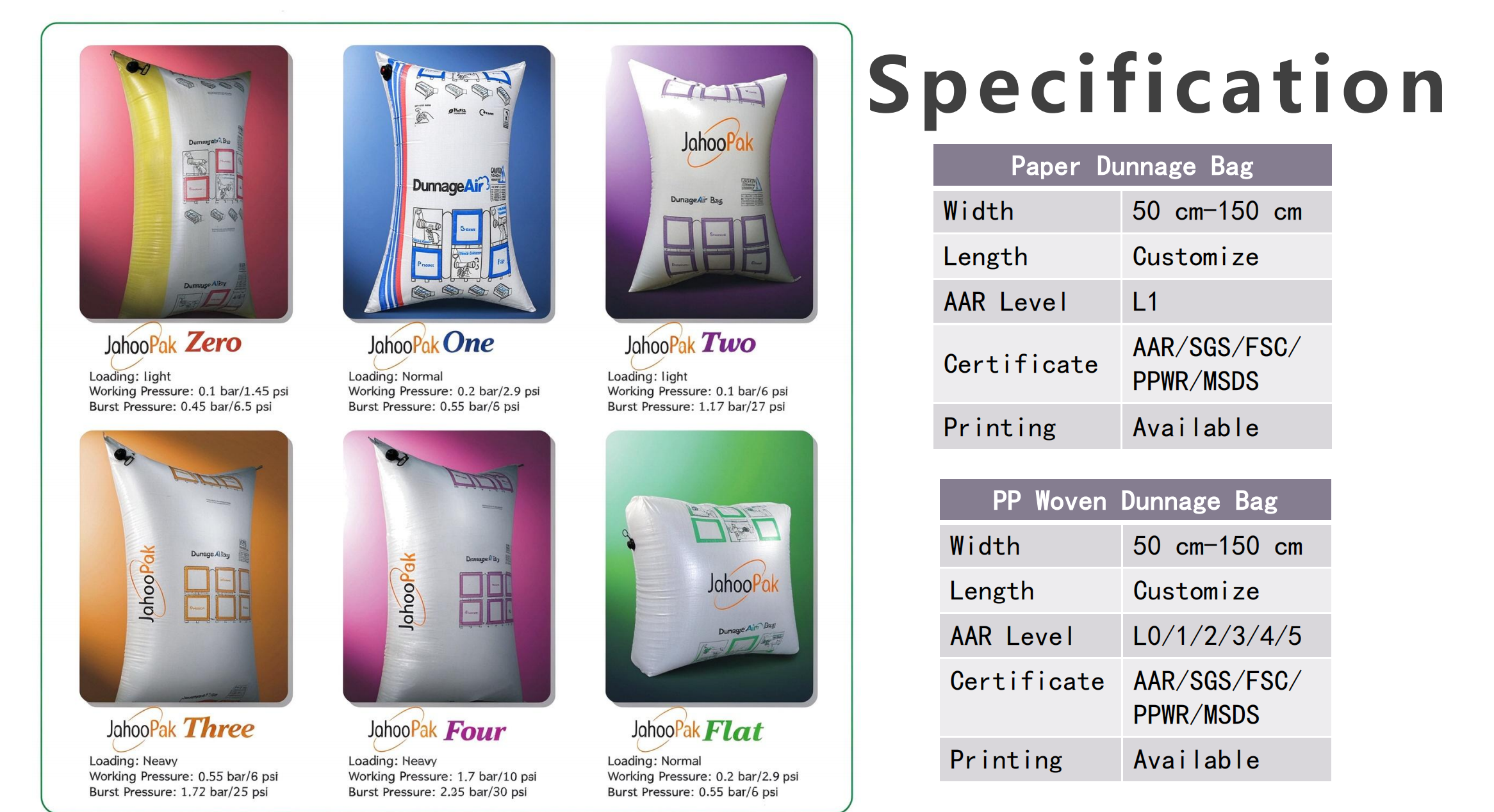
Paper Dunnage Bags Are Lightweight and Cost Effective
Paper dunnage bags are made for customers who want a simple and low cost void filling solution. They work well for general merchandise, cartons and medium light cargo. The width ranges from 50 cm to 150 cm, and the length can be customized.
Inflation Tools:
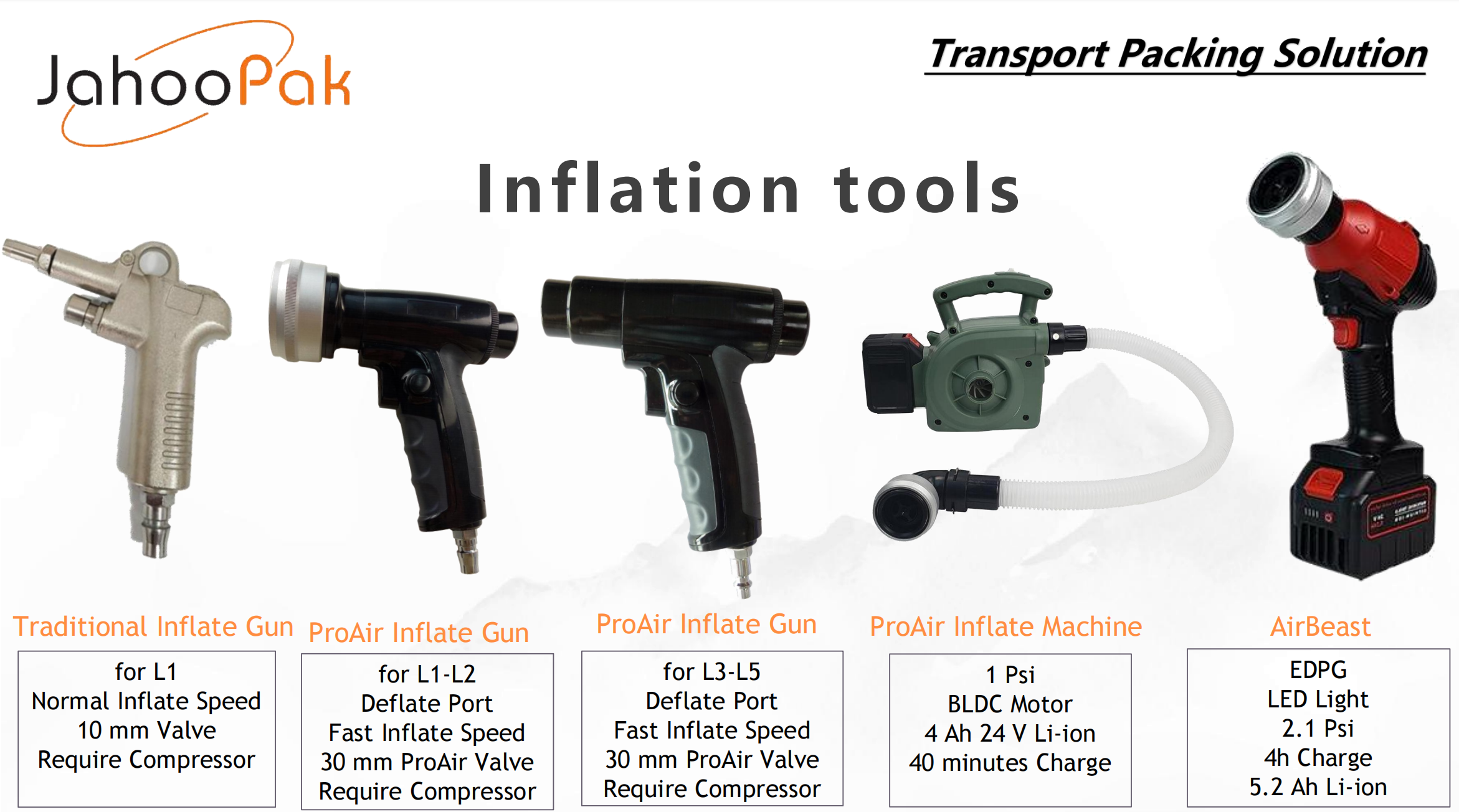
Traditional Inflate Gun Is Suitable for Basic Filling Work
The traditional inflate gun is a simple tool for standard dunnage bags. It is often used with the traditional 10 mm valve. This tool works well for basic inflation tasks in the warehouse. It requires an air compressor to operate.
Previous:
Eco Friendly Disposable Kraft Paper Dunnage Air Bag for Pallet Cargo Anti Shift Stabilization
Next:
L1 Grade Kraft Paper Dunnage Air Bag for General Cargo Sea Freight Container Securing