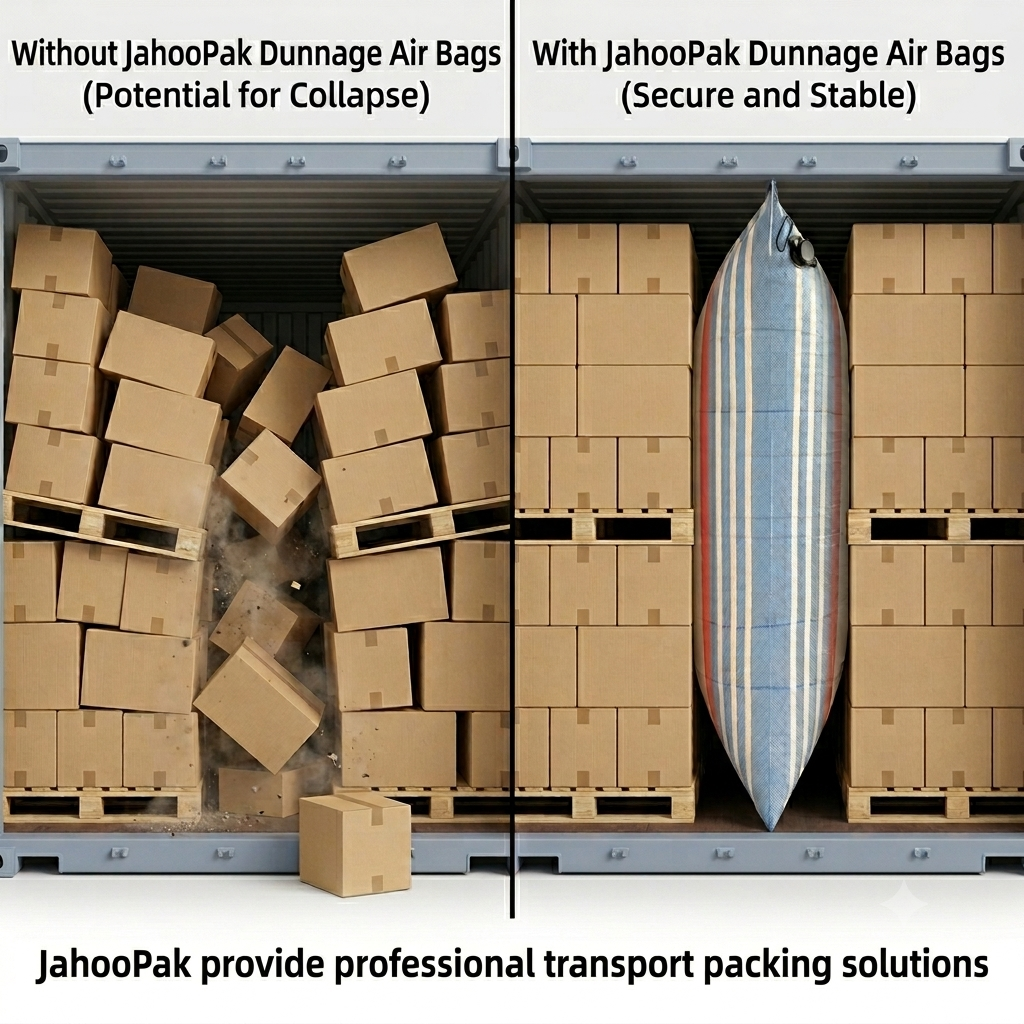
Details About PP Woven Air Bag:
Surface custom printing utilises solvent-resistant industrial ink that survives salt-spray ambient conditions typical aboard ocean-going vessels. Printed information will not rub off from repeated physical contact with surrounding cargo surfaces. Multiple data categories can be co-located on one bag face: brand identifier, transport hazard cues and unique batch traceability codes for supply-chain audit purposes.
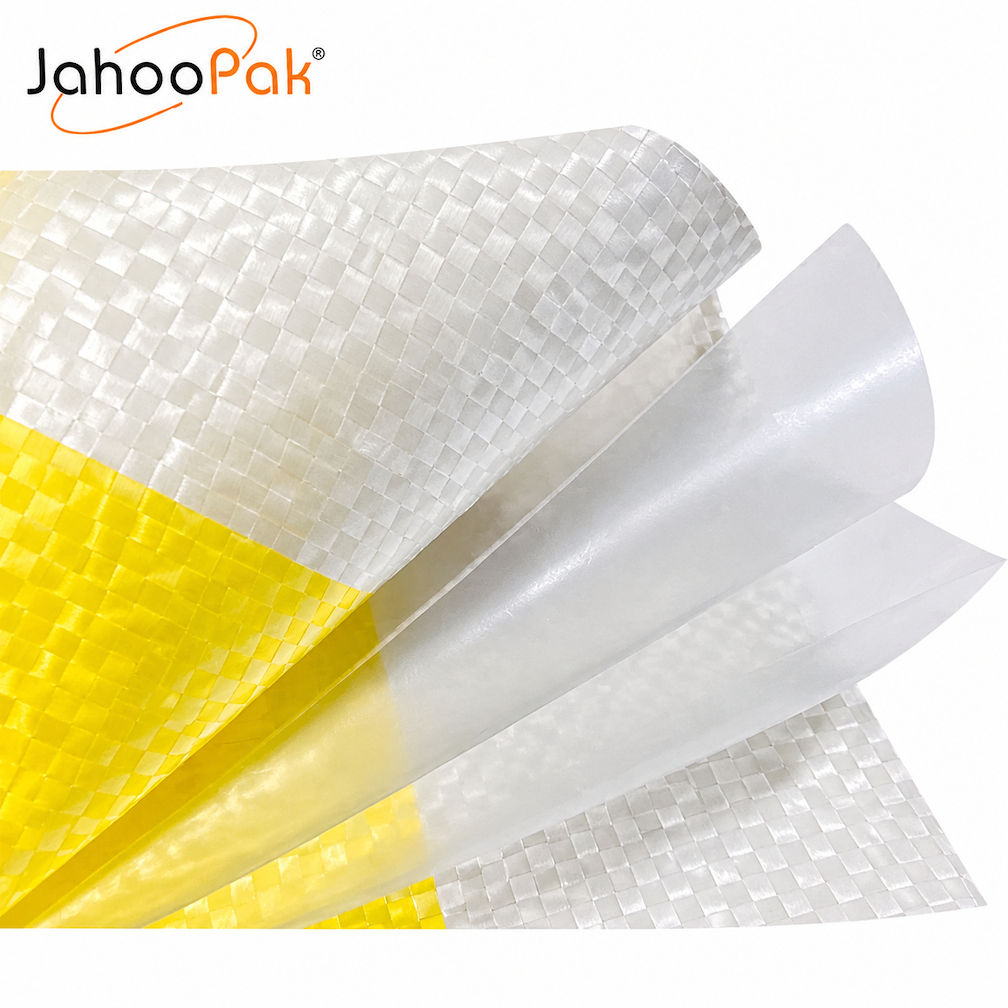
How To Use Dunnage Air Bags
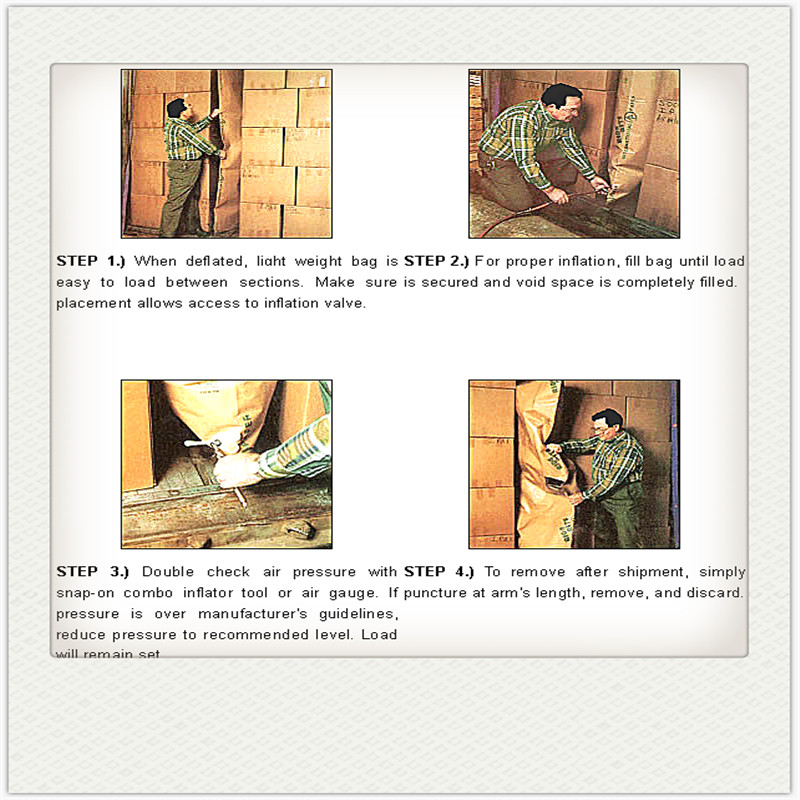
Step by Step Operating Instructions
- Evaluate gap size and load thrust: Measure the height and width of each void. Calculate the lateral or longitudinal force the bag will bear. Select suitable bag size and AAR level.
- Prepare inflation equipment: Check the air compressor battery level or air supply for electric inflators. Confirm the inflator works normally.
- Place the bag correctly: Insert the bag into the gap and keep it flat. Do not fold or squeeze the bag into irregular shapes.
- Inflate and adjust tightness: Fill air slowly and test cargo stability by hand. Always follow the rated working pressure limit.
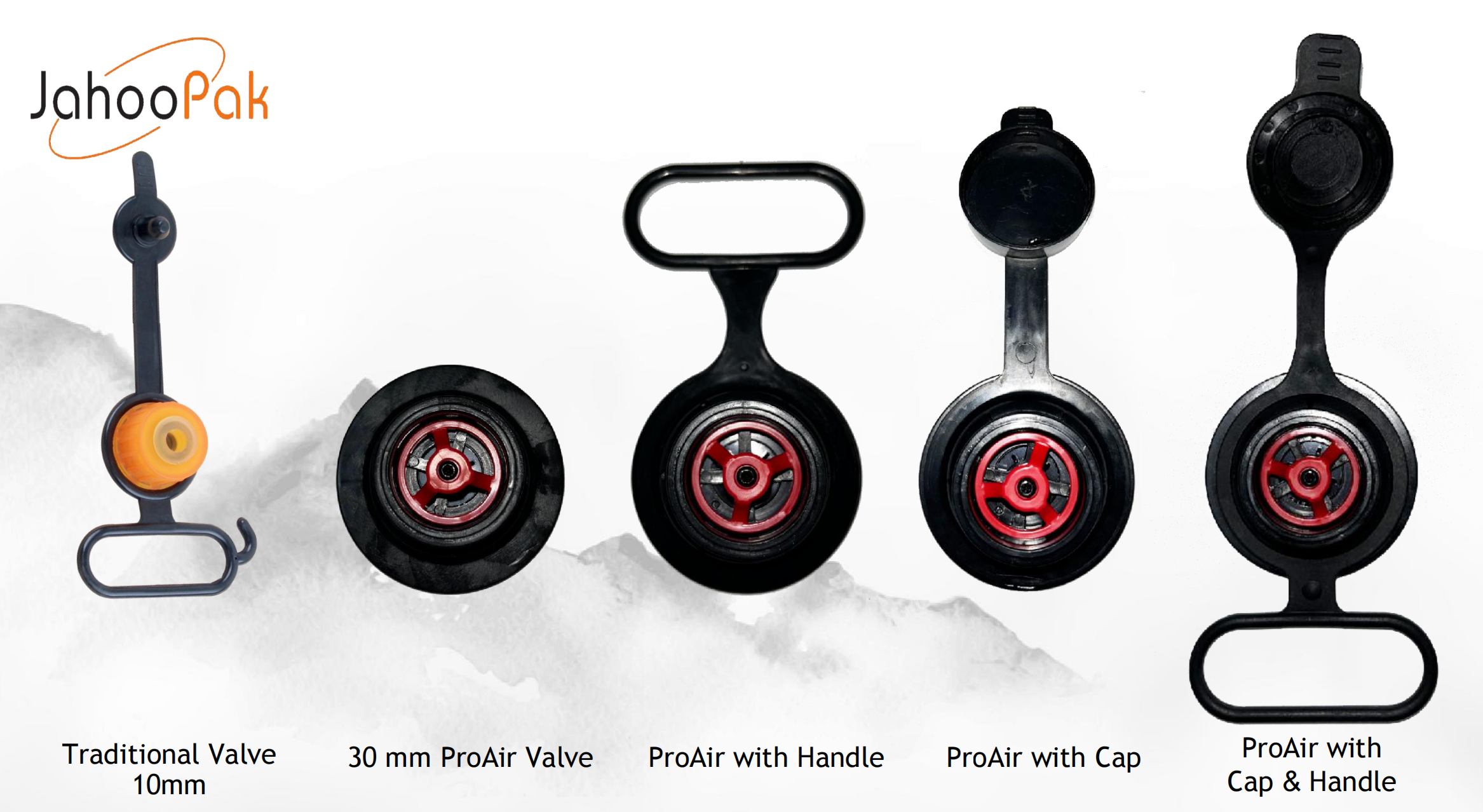
- Label the bags for easy identification: Mark grade information on the valve area. After all checks are finished, seal the container for shipment.
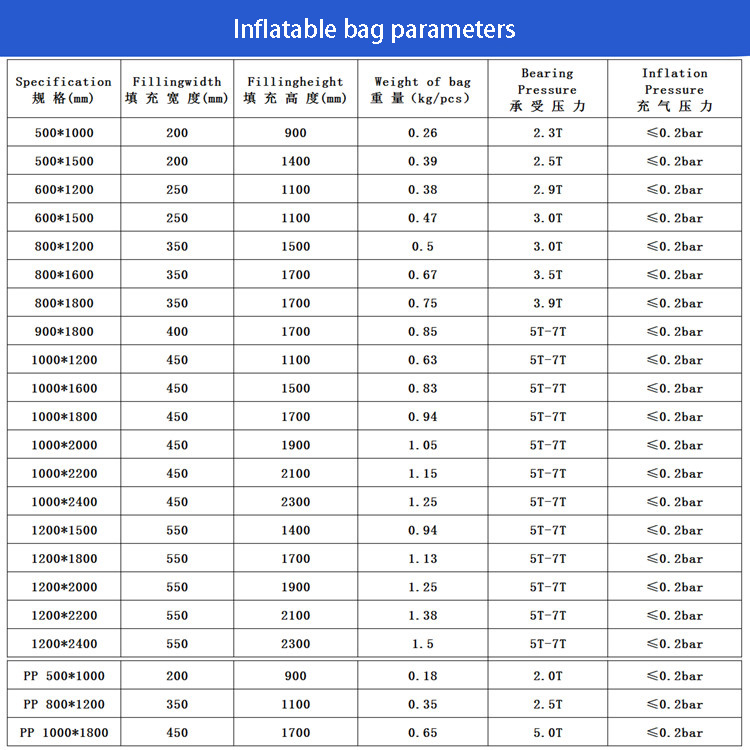
Popular size:
We separate PP woven dunnage bag parameters at the bottom of this table for easy comparison. PP woven bags use high strength woven fabric as outer material. They have good wear resistance and can be reused many times. Kraft paper bags are single use products with lower cost for one way shipment. You can compare the filling size and bearing pressure of the two types with same dimensions. For heavy cargo and repeated circulation, PP woven bags are more cost effective. For one time export shipment with budget control, kraft paper dunnage bags are the preferred choice.
Different Levels:
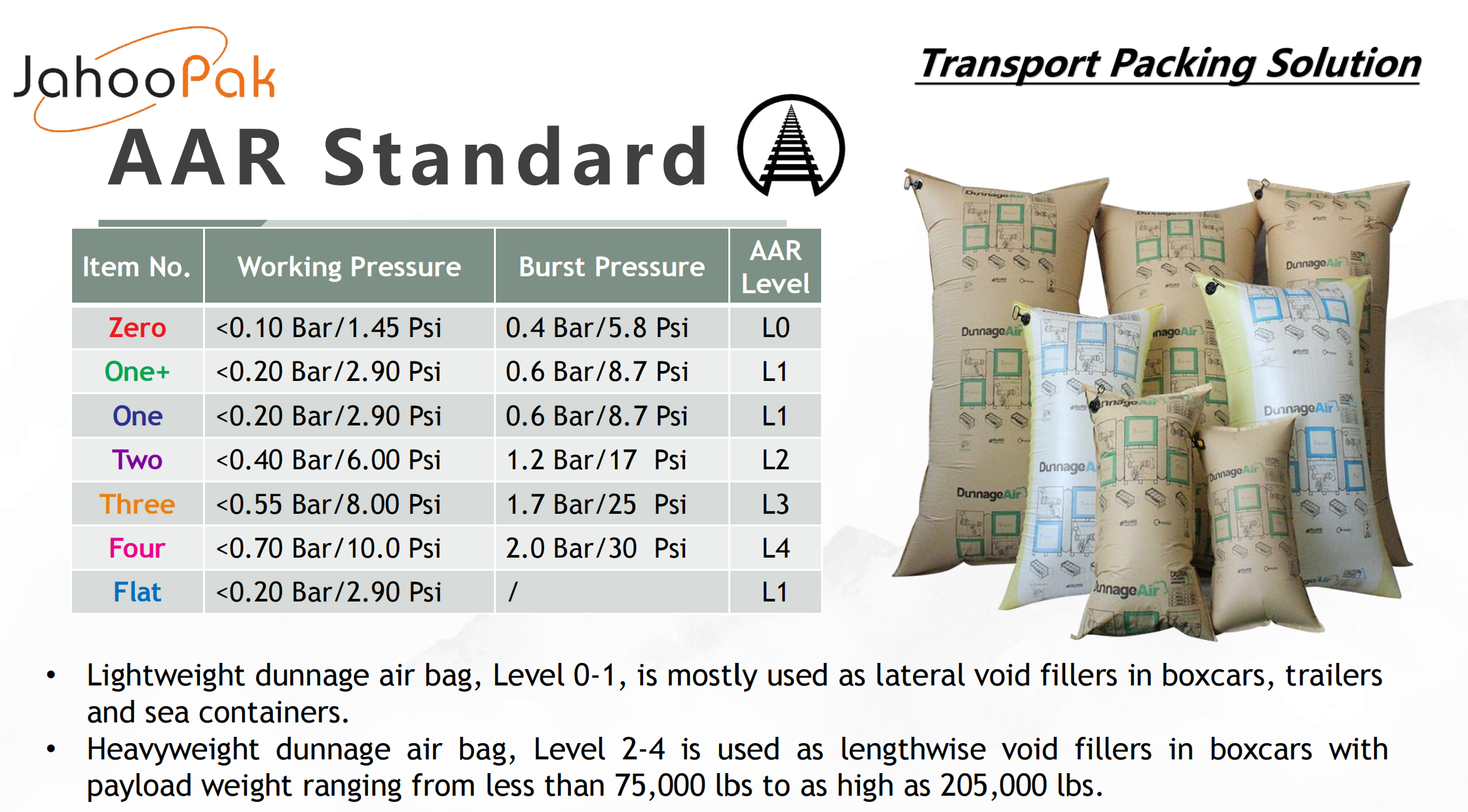
Rail transport has stricter requirements for dunnage bags than simple sea shipping. AAR certification is widely recognized for North American rail cargo. Trains produce huge impact force during start, brake and curve turning. Wrong AAR level will cause cargo collapse and transport accident. Our grade classification helps you match bags by payload weight and force direction. Lateral gaps use light L0 L1 bags, longitudinal heavy gaps need L2 L3 L4 heavy duty bags.
Specification:
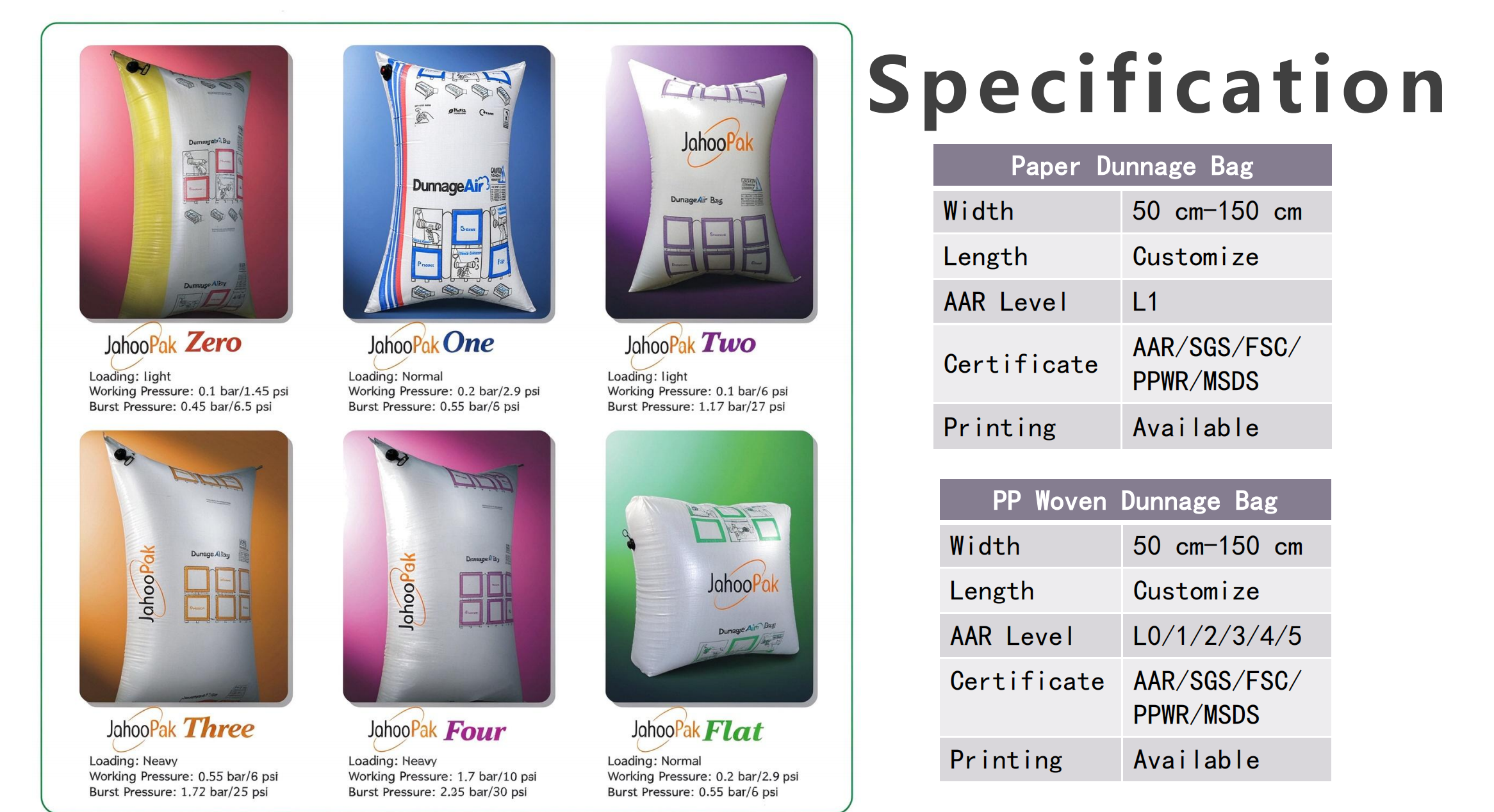
Custom printing and custom size service help you get packaging matching your brand needs. The width of both paper and woven bags ranges from 50 cm to 150 cm, and length can be adjusted freely. You can print company name, logo, warning marks or product information on bag surface. Custom printed bags improve brand exposure for every shipment.
Inflation Tools:
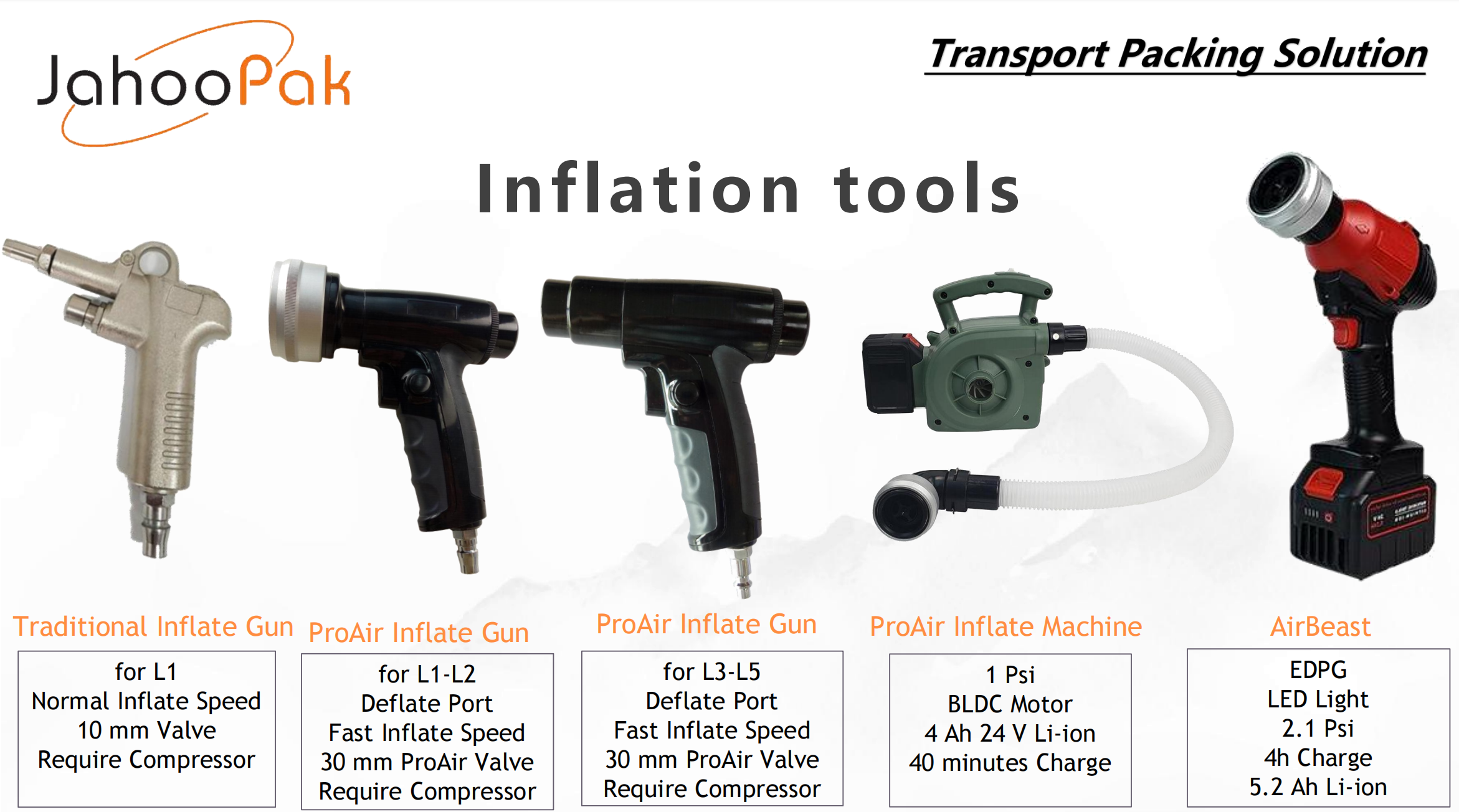
The ProAir inflator dual port design solves the pain point of repeated loading for reusable PP woven bags. The inflation port fills air to tighten cargo while the deflation port releases air quickly after goods arrive at destination. For export customers who reuse woven dunnage bags many times, this function cuts down much working time.
Application:
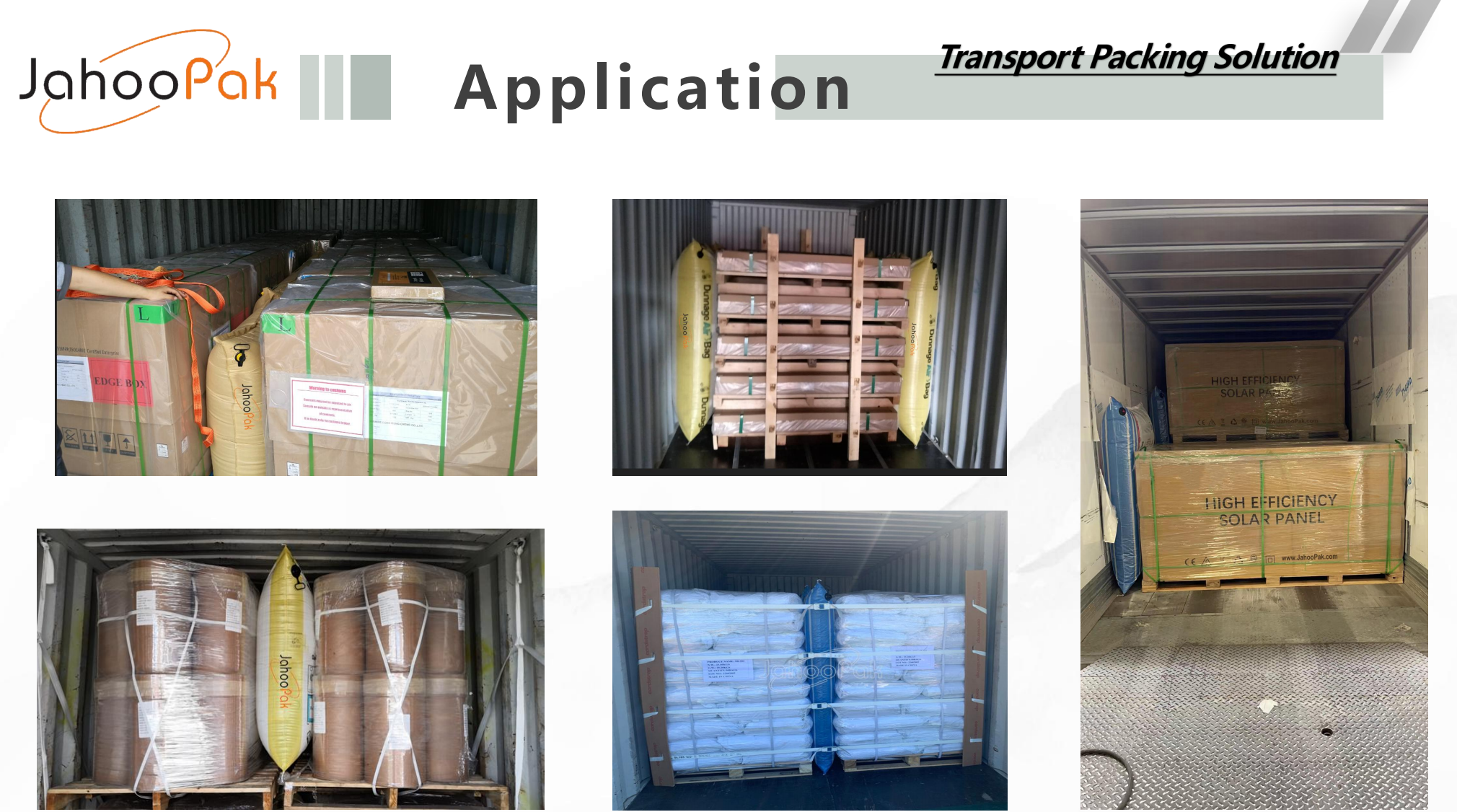
Scene Image