Details About Paper Air Dunnage Bag:
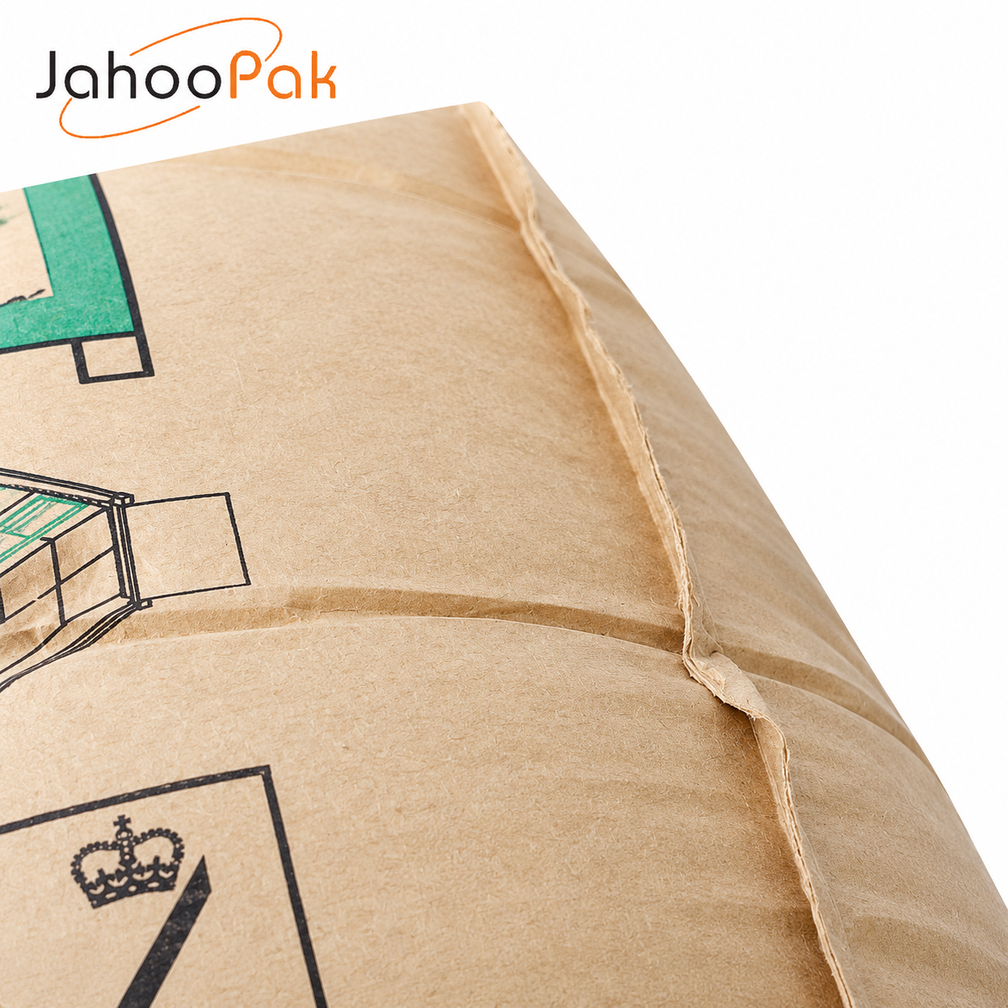
Every production lot will extract specimen samples to conduct short‑term burst‑point testing simulating one‑trip ocean‑transit stress. Test results are documented into lot‑archiving files for future trace‑back requirement. Note that this is single‑trip expendable article; repeated re‑inflation is not designed‑for usage scenario. Product technical datasheet will clearly mark usage boundary for reference of overseas purchasing‑and‑loading‑teams.
- 1. Paper‑adhering transit‑grade printing ink resists light in‑container friction smudge
- 2. Custom‑print workflow includes pre‑mass‑production sample proof‑confirmation step
- 3. Lot‑wise burst‑point specimen testing simulates real‑world single‑voyage transit stress
- 4. Complete lot‑archiving test‑document supports customer quality‑trace‑back requirement
- 5. Clear datasheet marks single‑trip‑only usage boundary to prevent mis‑application
- 6. Pre‑set mechanical‑test‑validated fold‑lines lower crease‑cracking inflation risk
- 7. Outer carton carries readable spec‑label to speed‑up warehouse inventory sorting
- 8. Expendable design simplifies destination‑side waste‑disposal for receiving depots
- 9. AAR‑compliant construction satisfies medium‑light‑load multi‑modal‑transport norms

How To Use Dunnage Air Bags
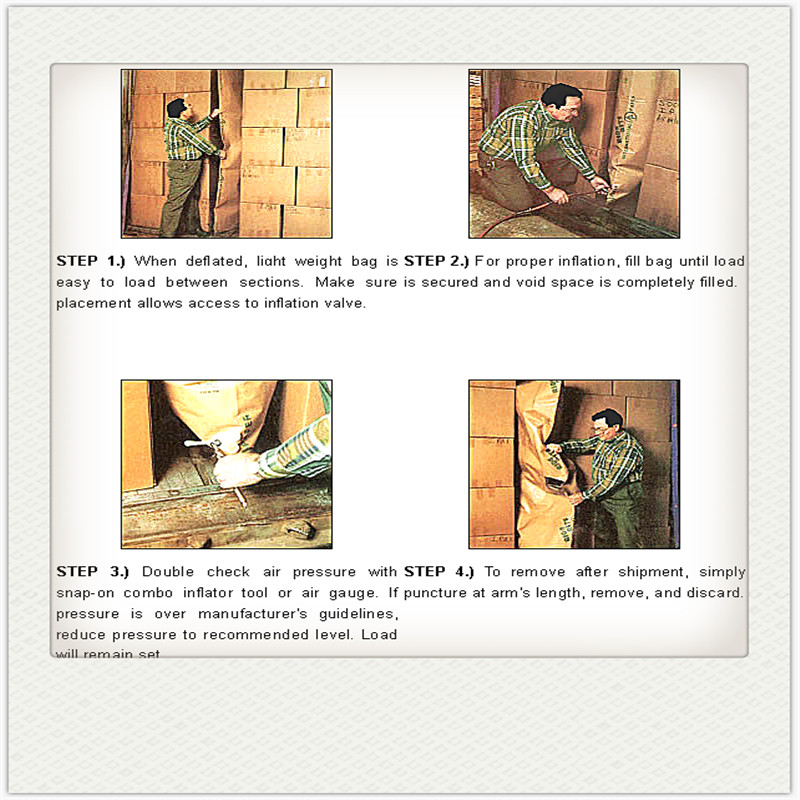
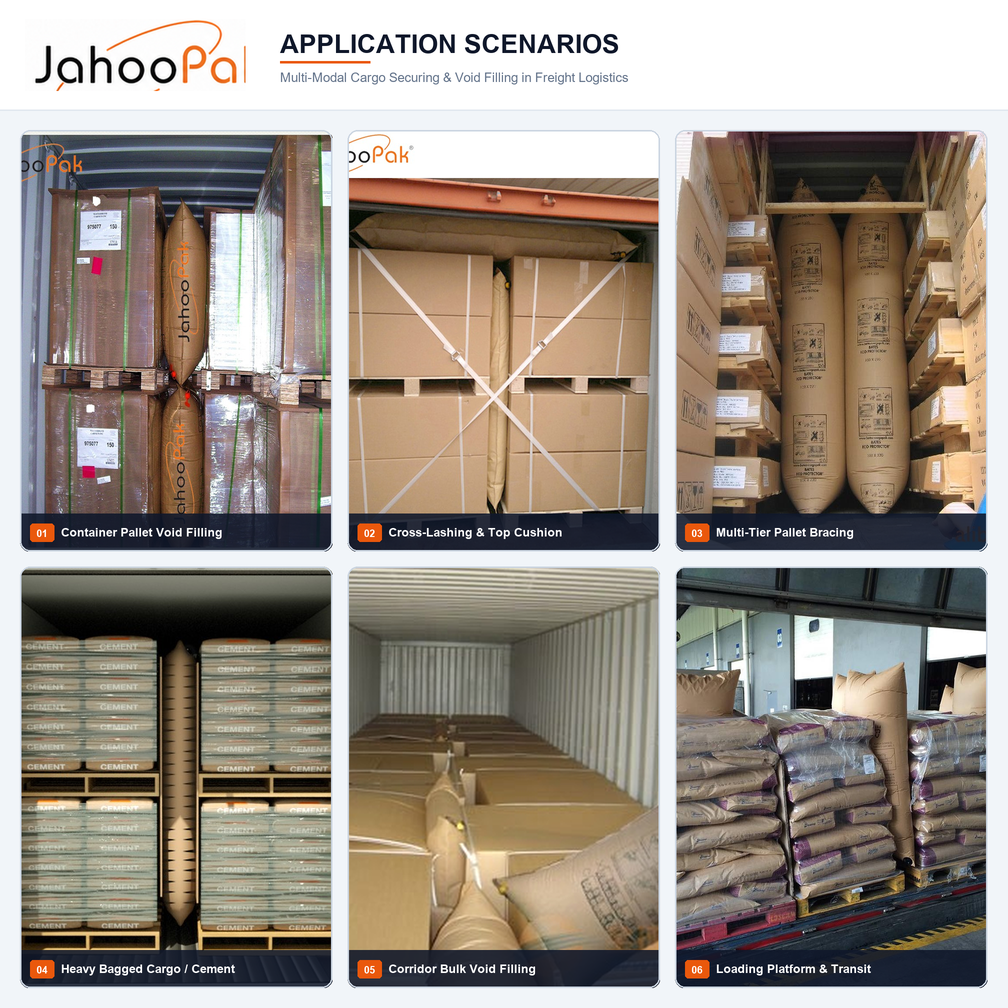
- Put deflated lightweight kraft bag into voids: Prepare the flat deflated kraft dunnage bag and insert it into gaps between cargo sections. Make sure the inflation valve stays exposed and easy to reach. Do not block the valve with cartons or pallet goods.
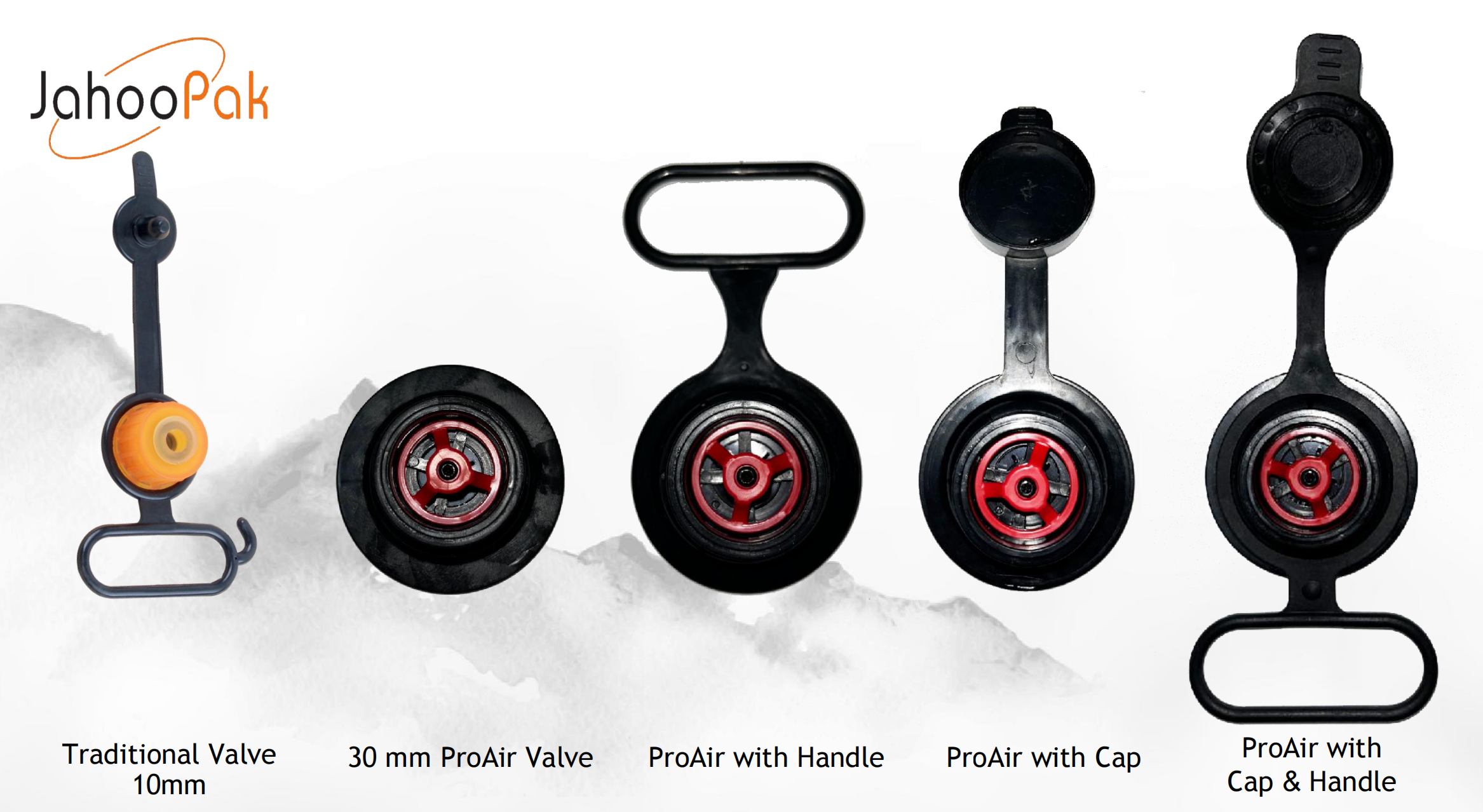
- Inflate continuously to fill the empty gap: Connect the dedicated inflator tool and fill air. Keep inflating until the cargo is locked and the void space is fully filled. Proper inflation helps reduce vibration and cargo shifting during intermodal transport.
- Double check pressure and adjust overpressure: Use air gauge to check the working pressure. When the pressure is higher than the allowed value, release air to the recommended level. After adjustment, the load will remain stable through sea or rail delivery.
- Dispose safely after shipment is finished: When unloading, puncture the bag at arm’s length to release air. Kraft paper dunnage bags are designed for one time use. Remove and throw away the punctured bag, do not save it for next loading.
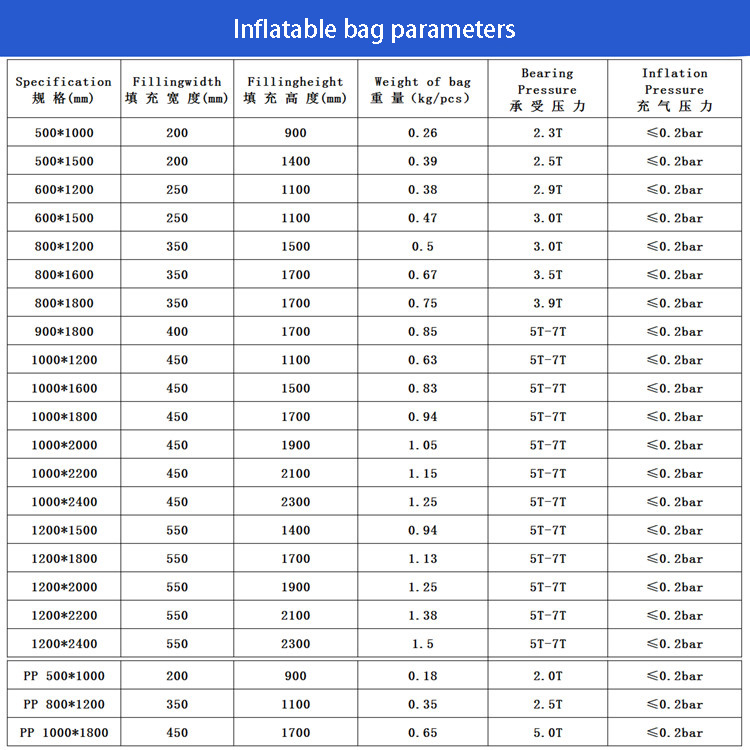
Popular size:
Inflation Pressure Control Protects Kraft Paper Bags from Damage
Inflation pressure control is very important when using kraft paper dunnage bags. According to the table, all standard sizes require inflation pressure no more than 0.2 bar. This limit applies to most kraft paper bags listed here. Even if the cargo feels loose, users should not inflate beyond this pressure. Over inflation will increase internal tension and may cause the bag to burst. If stronger support is needed, users should choose a larger size or a higher grade bag instead of increasing pressure.
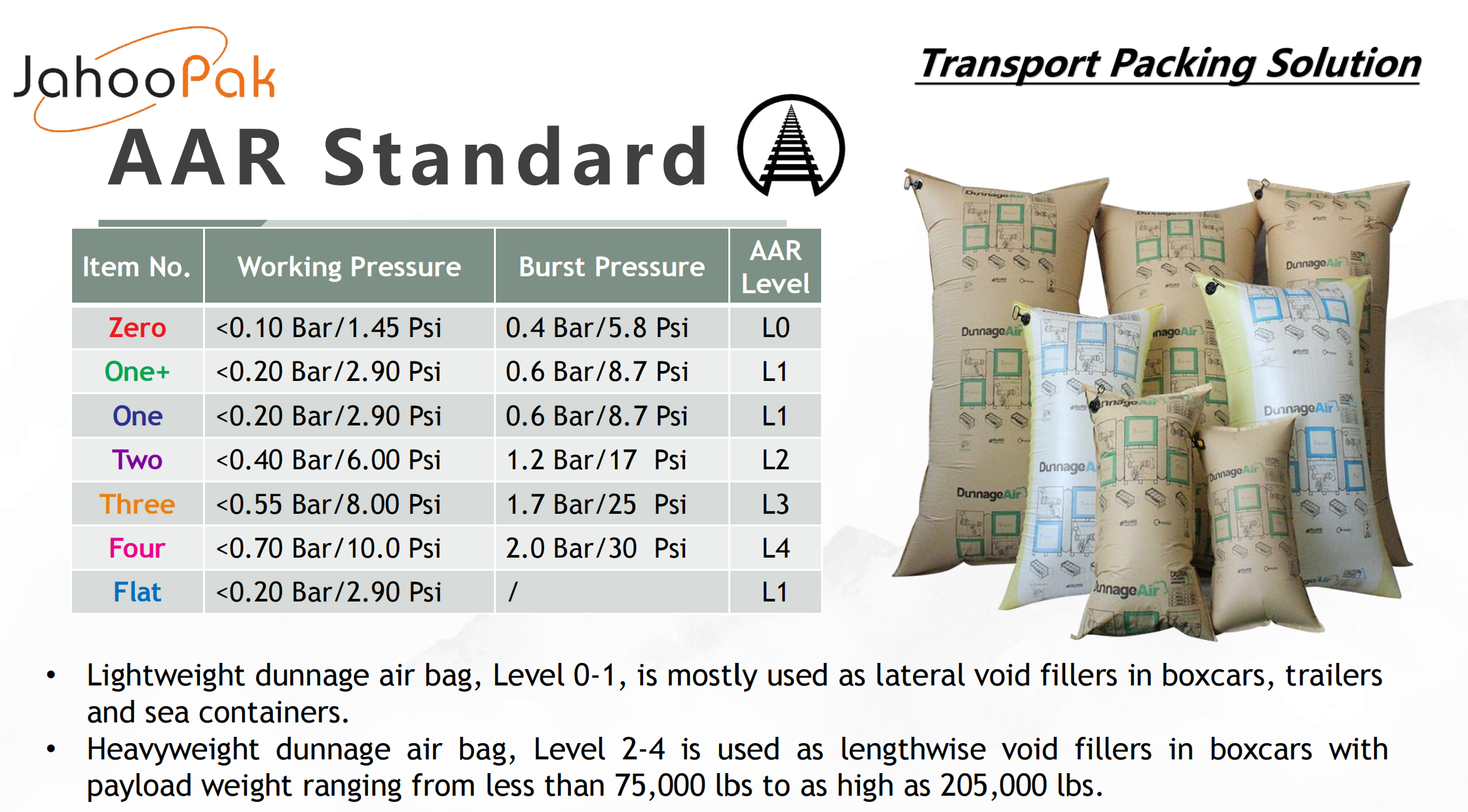
Different Levels:
AAR Level Selection Depends on Transport Mode and Cargo Weight
AAR level selection is not only about bag size. It also depends on transport mode, cargo weight and gap position. Sea containers may use lighter grades if the cargo is stable. Rail transport usually requires stricter grade selection because of stronger instant impact. Longitudinal gaps need heavier bags than lateral gaps. Users should also check whether their cargo may generate sudden thrust during transit. Correct level selection reduces the risk of cargo shifting and bag failure.
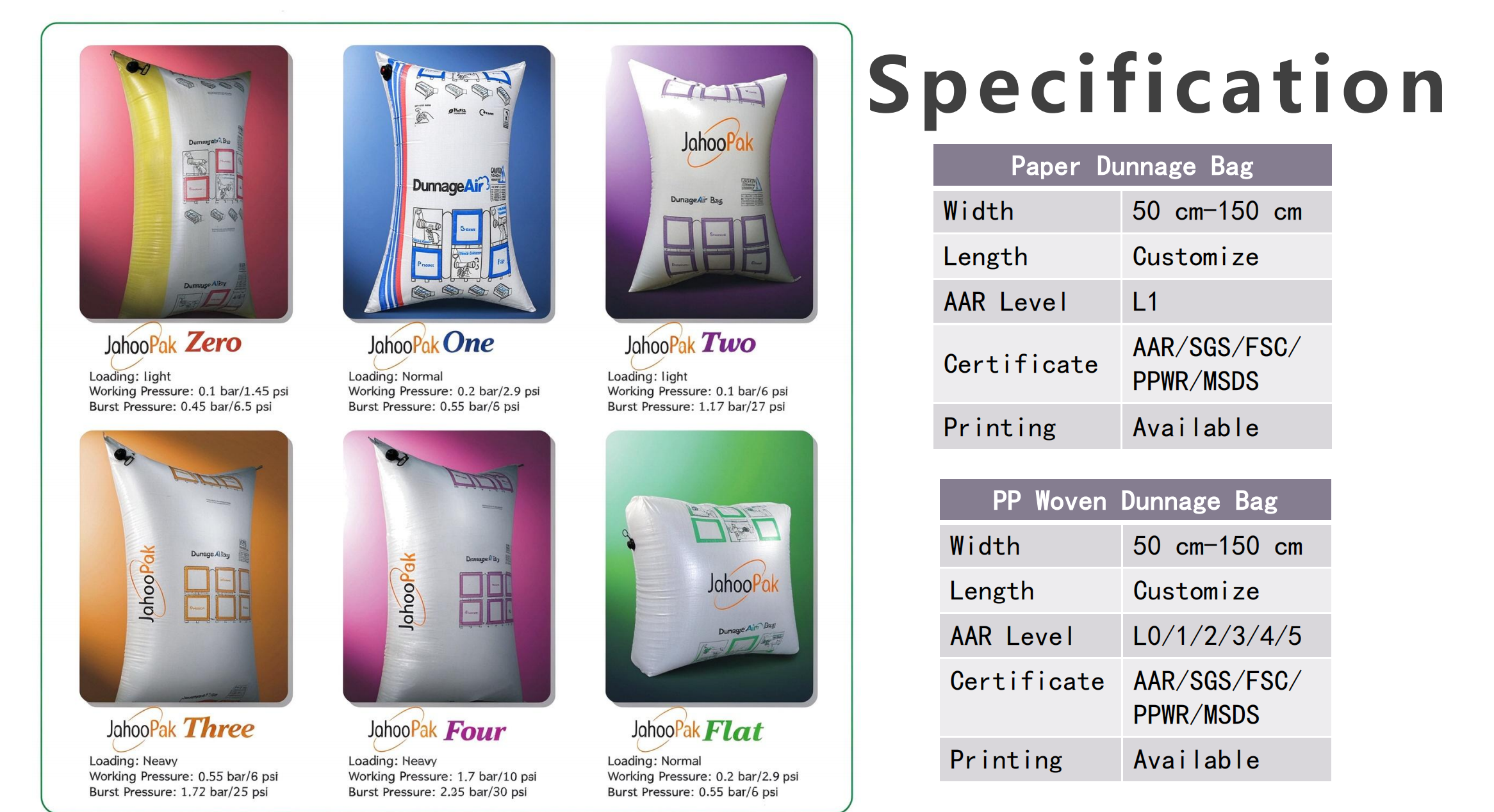
Specification:
Certificates Support International Shipping Requirements
Paper and PP woven dunnage bags can hold multiple certificates required for international shipping. These may include AAR, SGS, FSC, PPWR and MSDS. AAR is important for rail transport applications. SGS provides material and performance testing support. FSC confirms responsible sourcing for paper materials. PPWR compliance helps meet EU requirements. MSDS supports shipping and customs documentation. Having these certificates ready makes it easier to pass buyer audits and customs checks.
AirBeast Provides Cordless Inflation Flexibility
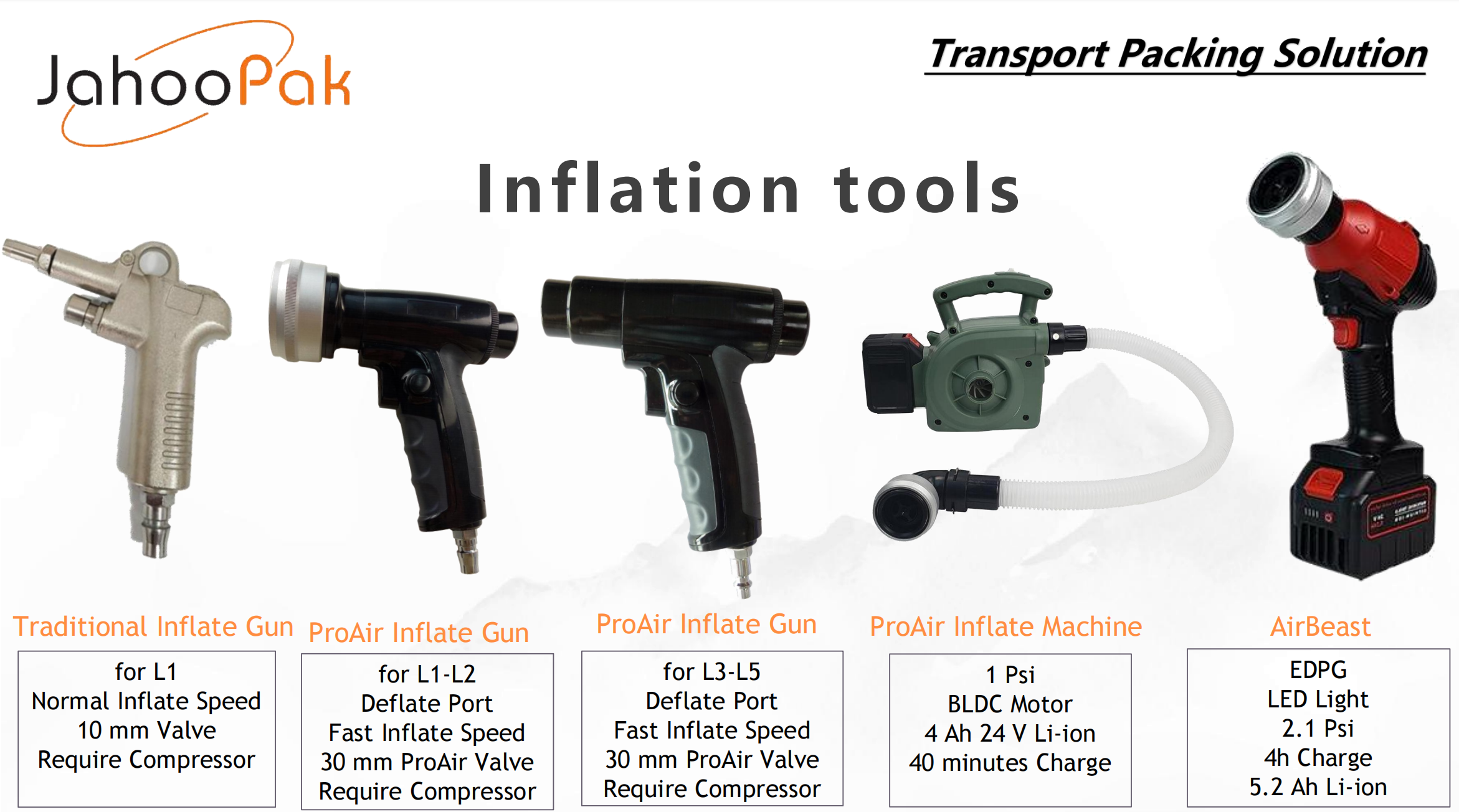
AirBeast is a cordless inflation tool for dunnage bags. It runs on a rechargeable battery, so it can be used anywhere in the container yard. This tool is convenient when there is no fixed air compressor nearby. It is suitable for customers who need flexible loading operations. Staff should check the battery level before starting work. Cordless tools help reduce cable trouble and improve mobility during container stuffing.