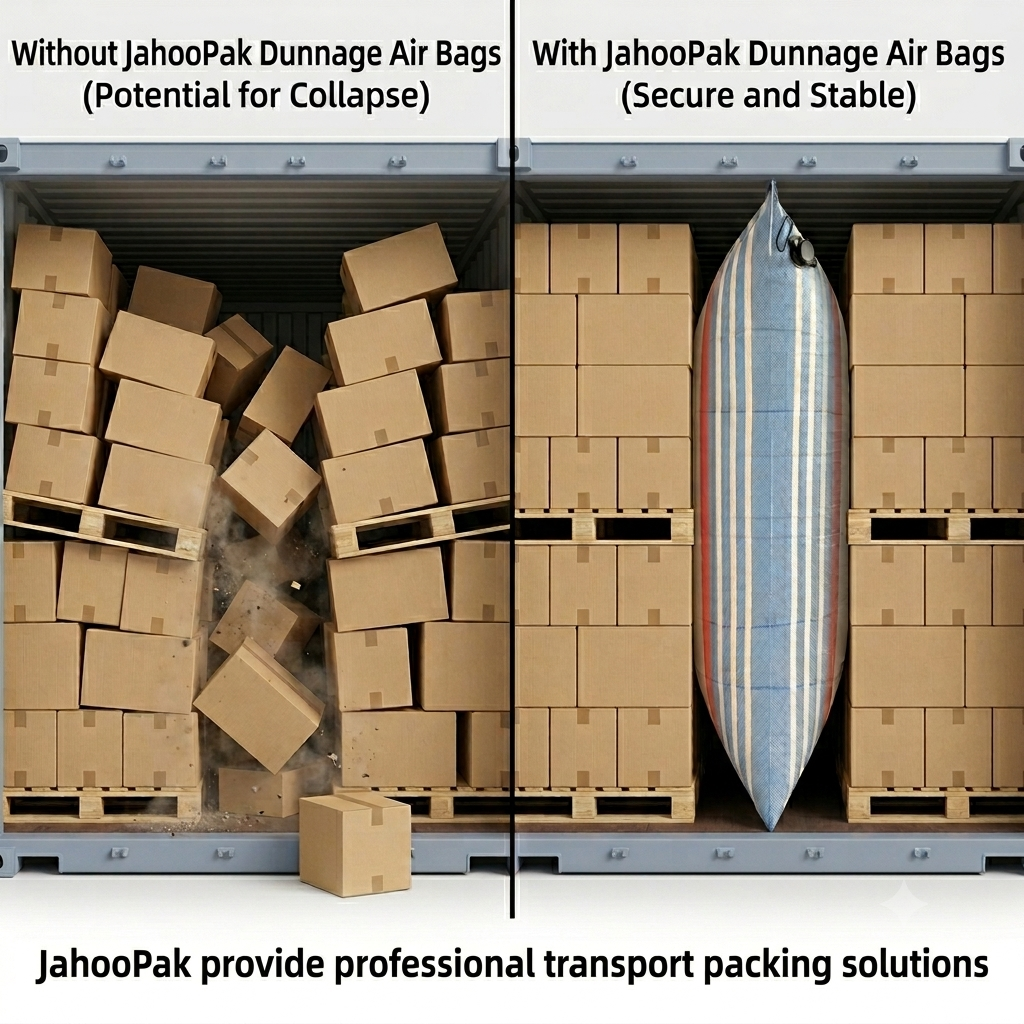
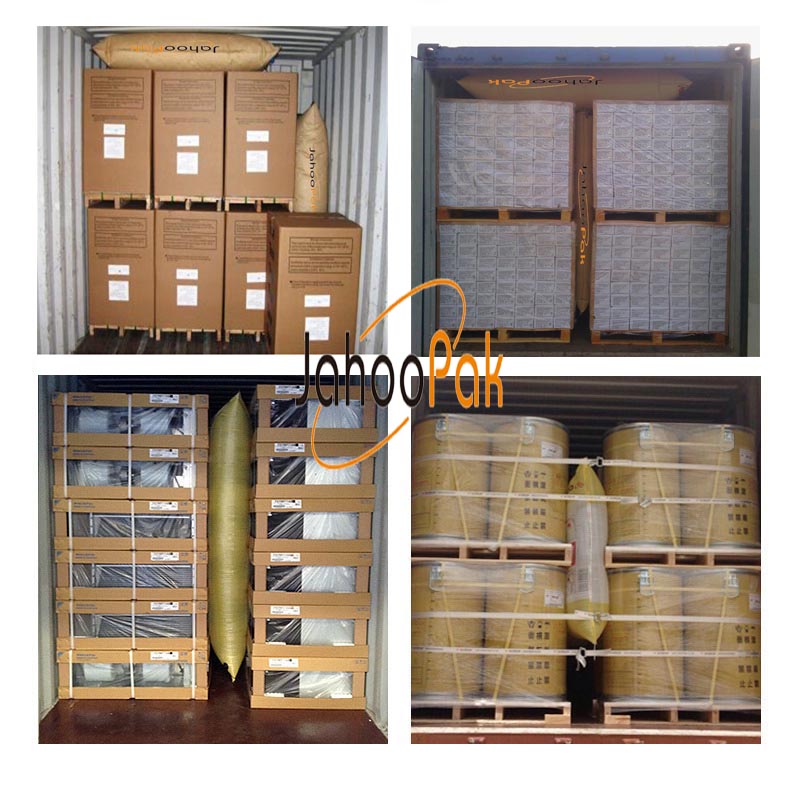
i More Details:
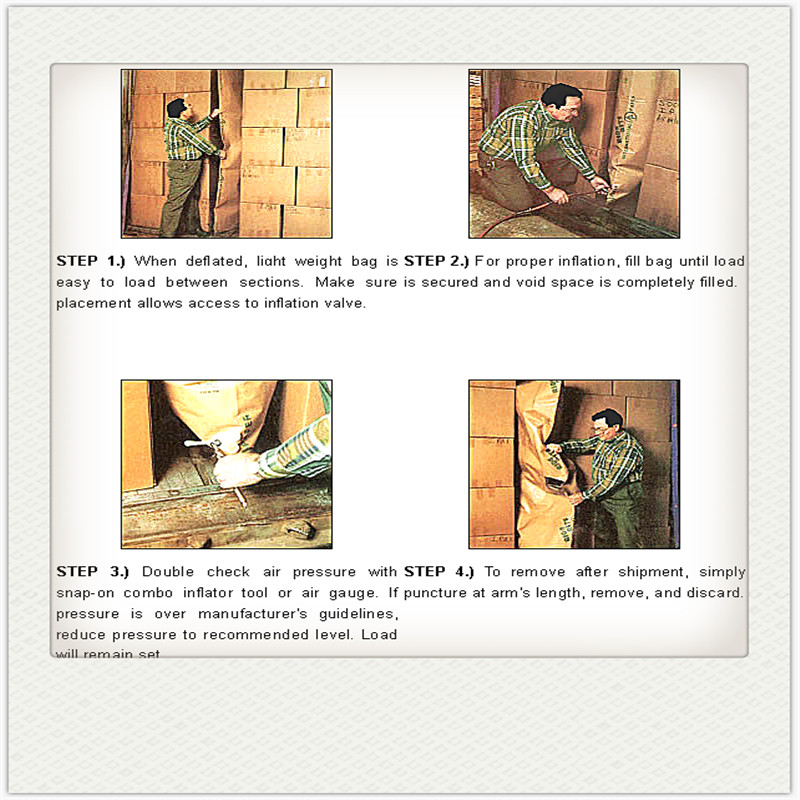
? How To Use Dunnage Air Bags
Inspect cargo and gap space: Check the void space between pallet goods. Remove sharp edges metal burrs exposed nails and hard protrusions that may puncture or tear the dunnage bag. Measure the actual gap width to select the correct bag size. Do not use damaged bags with scratches or pinholes.
Place dunnage air bag into void gap: Put the dunnage air bag in the center position of the gap. Adjust bag height to keep its top surface level or slightly higher than cargo height. If the bag touches rough pallet corners add protective sheets to prevent abrasion. Make sure the bag sits fully inside the container gap without bending or folding.
Connect inflation tool: Align the nozzle of inflate gun to the bag valve. Push and lock the nozzle for tight connection. Confirm your air compressor is set within product recommended working pressure. Use matching inflator for traditional valve or ProAir large valve.
Inflate the dunnage air bag: Start inflation slowly. Stop pumping air once the bag fills the whole gap and holds cargo firmly. Manually touch the bag surface to verify firm status. Do not over inflate. Excessive pressure will cause bag burst risk.
Check cargo stability: Push loaded cargo gently to test whether goods are locked without shifting. If cargo still moves slightly add a small amount of air. Recheck valve position to ensure no air leakage before container door closing.
! Deflation Steps for Reusable PP Woven Dunnage Air Bag
After cargo arrives at destination open container door and unload goods.
Insert deflation nozzle or pull the release tab on valve to release internal air.
Squeeze bag to exhaust remaining air completely.
Inspect bag surface for punctures or heavy abrasion. Store intact flat folded bags in dry ventilated warehouse for next shipment.
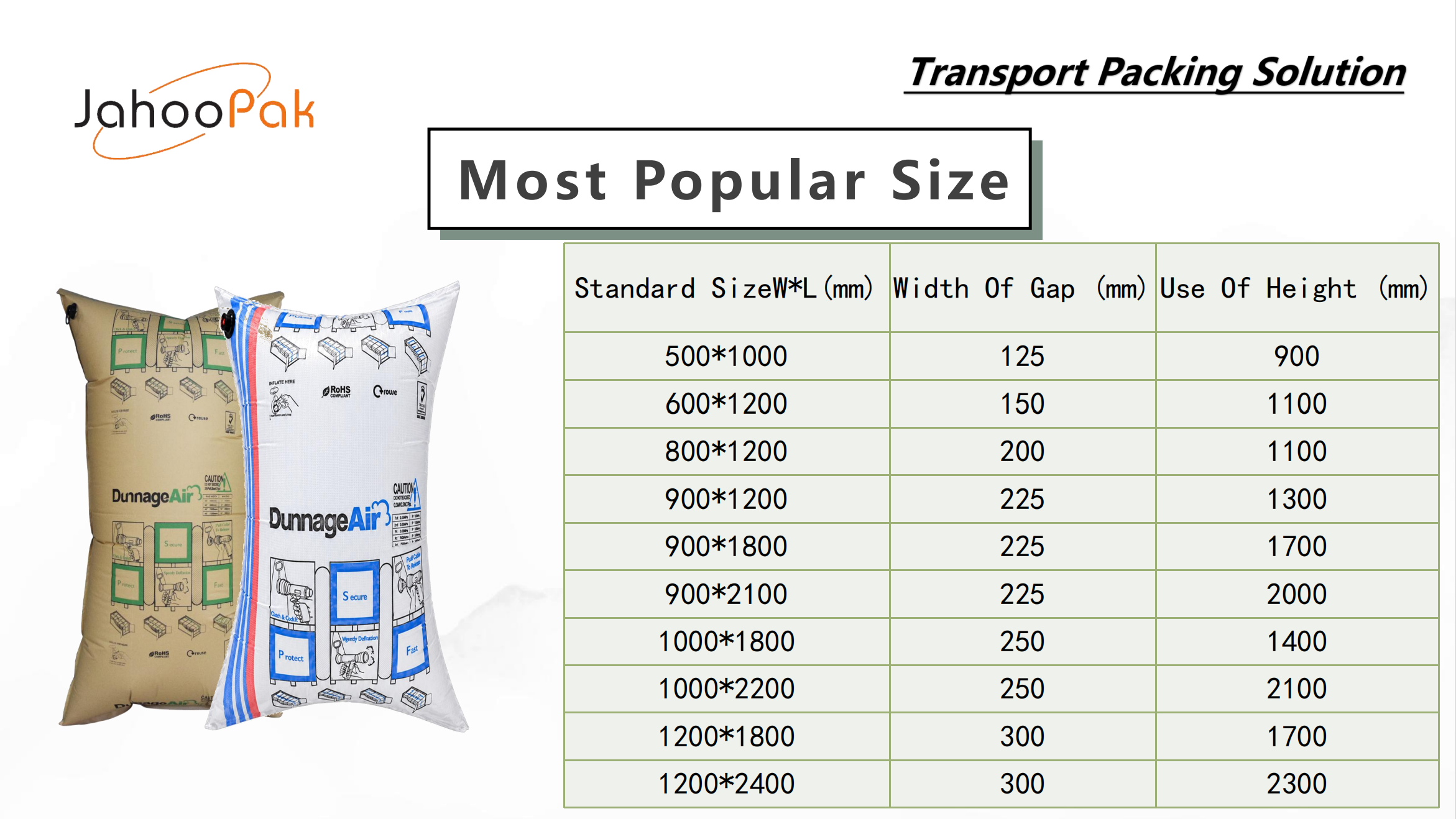
Popular size:
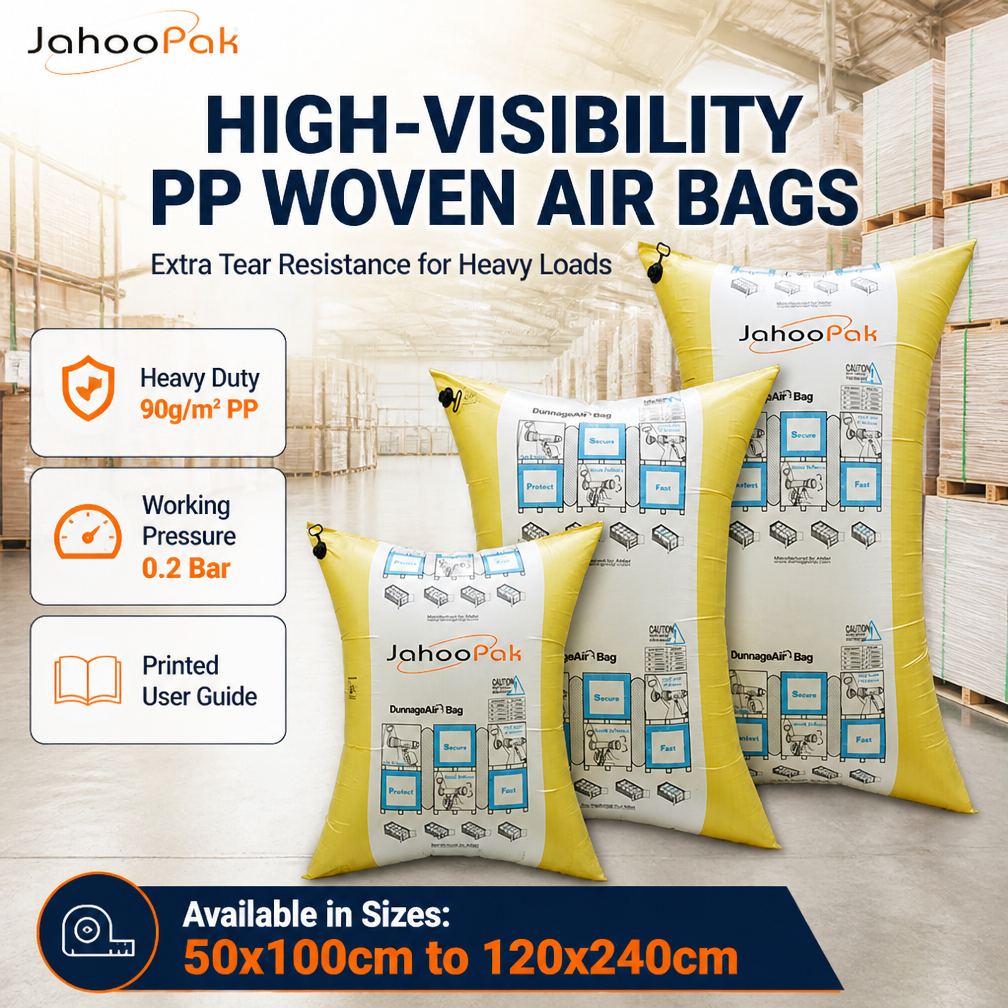
Here are our hot selling standard sizes of dunnage air bags. Each size corresponds to suitable gap width and usable height. The common specifications include 500*1000 mm, 600*1200 mm, 800*1200 mm, 900*1200 mm, 900*1800 mm, 900*2100 mm, 1000*1800 mm, 1000*2200 mm, 1200*1800 mm and 1200*2400 mm. You can select proper size according to the actual gap between cargo inside the container, to stabilise goods and avoid shifting during transit.
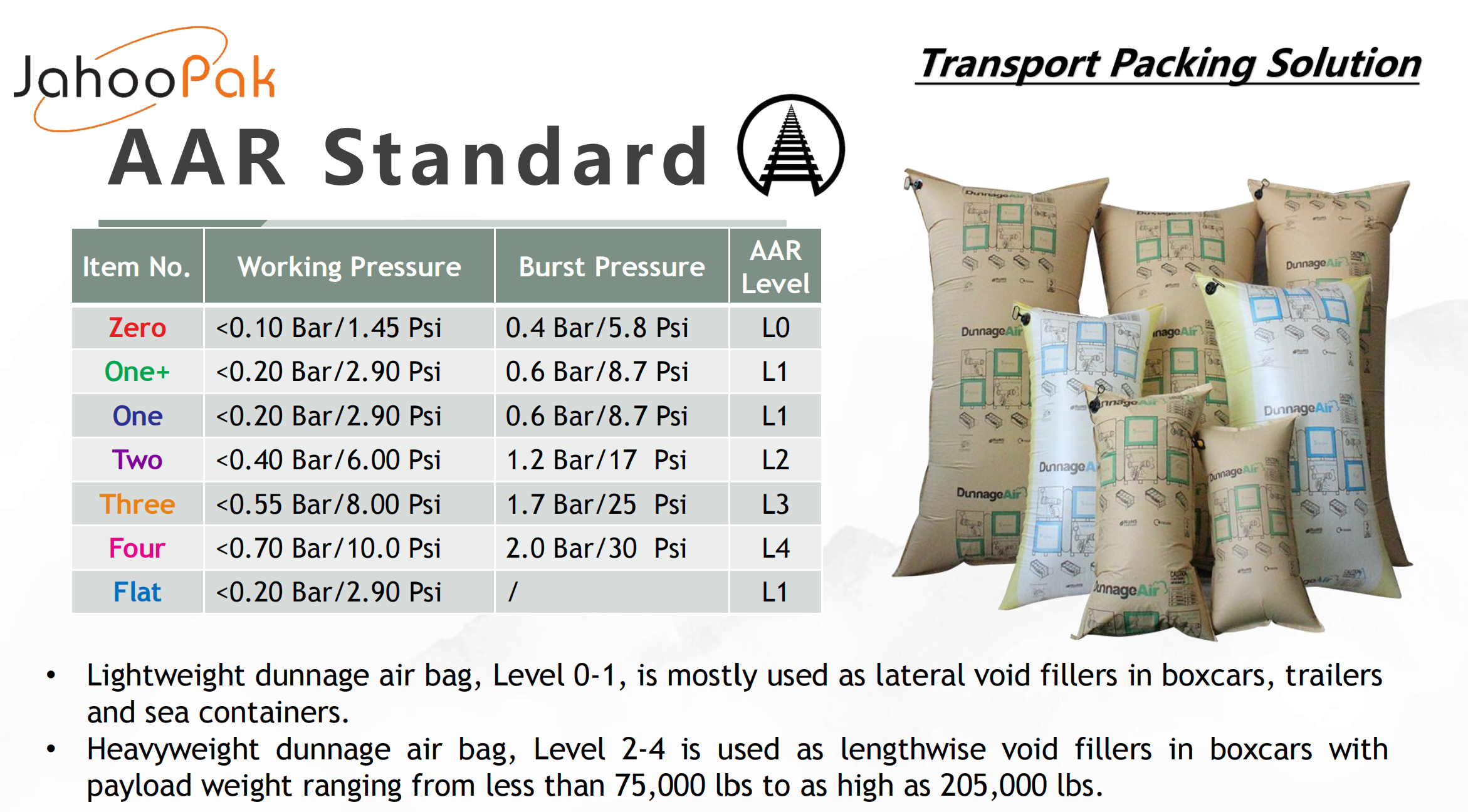
Different Levels:
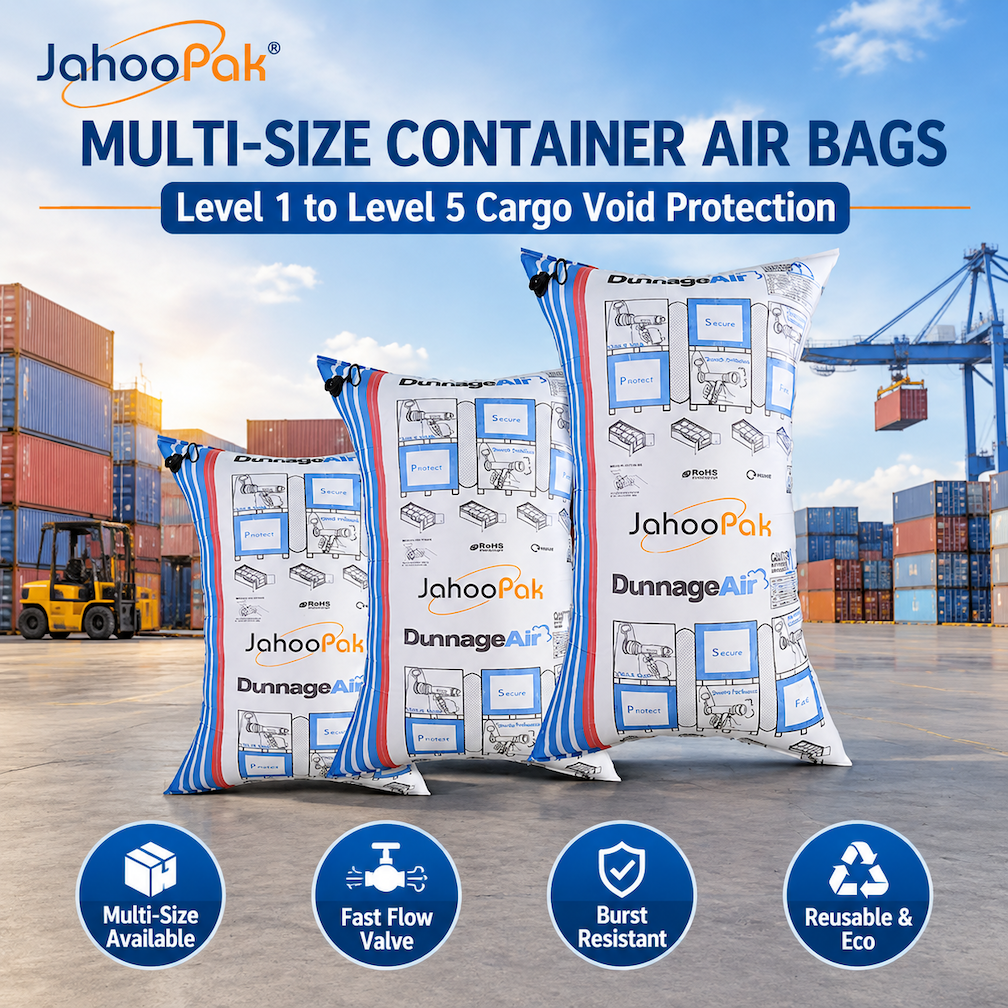
All our dunnage air bags are manufactured following AAR standard. Different grades carry fixed working pressure and burst pressure parameters. Zero grade is L0, One and One+ grade belong to L1, Two grade L2, Three grade L3, Four grade L4 and Flat grade L1. Lightweight dunnage bags of Level 0 to 1 are mainly lateral void fillers for boxcars, trailers and sea containers. Heavyweight dunnage bags of Level 2 to 4 are used as lengthwise void fillers in boxcars, suitable for payloads from under 75000 lbs up to 205000 lbs.
SCENE IMAGE