

How To Use Dunnage Air Bags
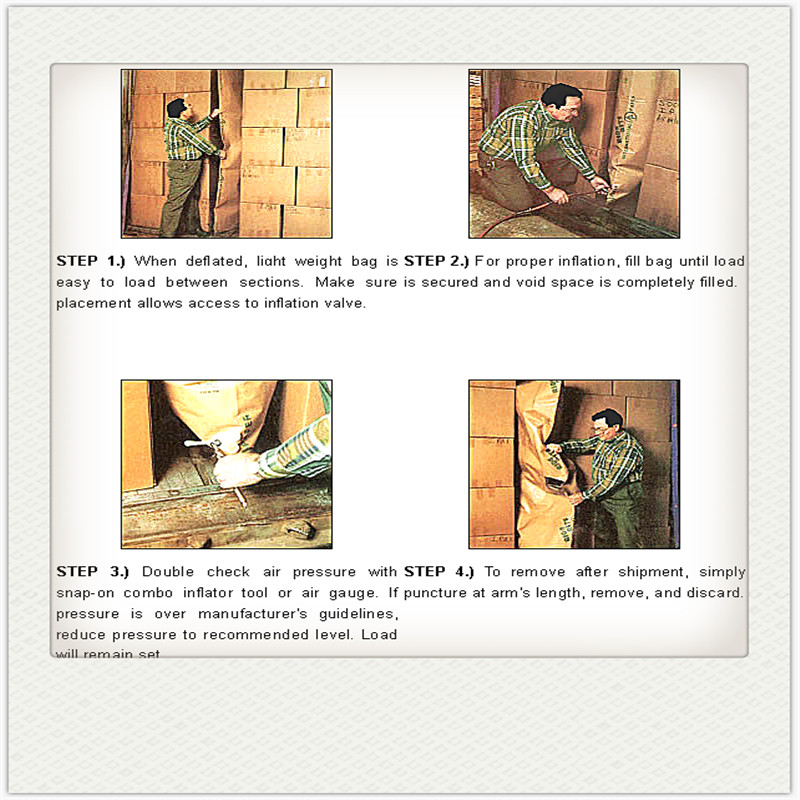
Check the void space between pallet goods. Remove sharp edges metal burrs exposed nails and hard protrusions that may puncture or tear the dunnage bag. Measure the actual gap width to select the correct bag size. Do not use damaged bags with scratches or pinholes.
Put the dunnage air bag in the center position of the gap. Adjust bag height to keep its top surface level or slightly higher than cargo height. If the bag touches rough pallet corners add protective sheets to prevent abrasion. Make sure the bag sits fully inside the container gap without bending or folding.
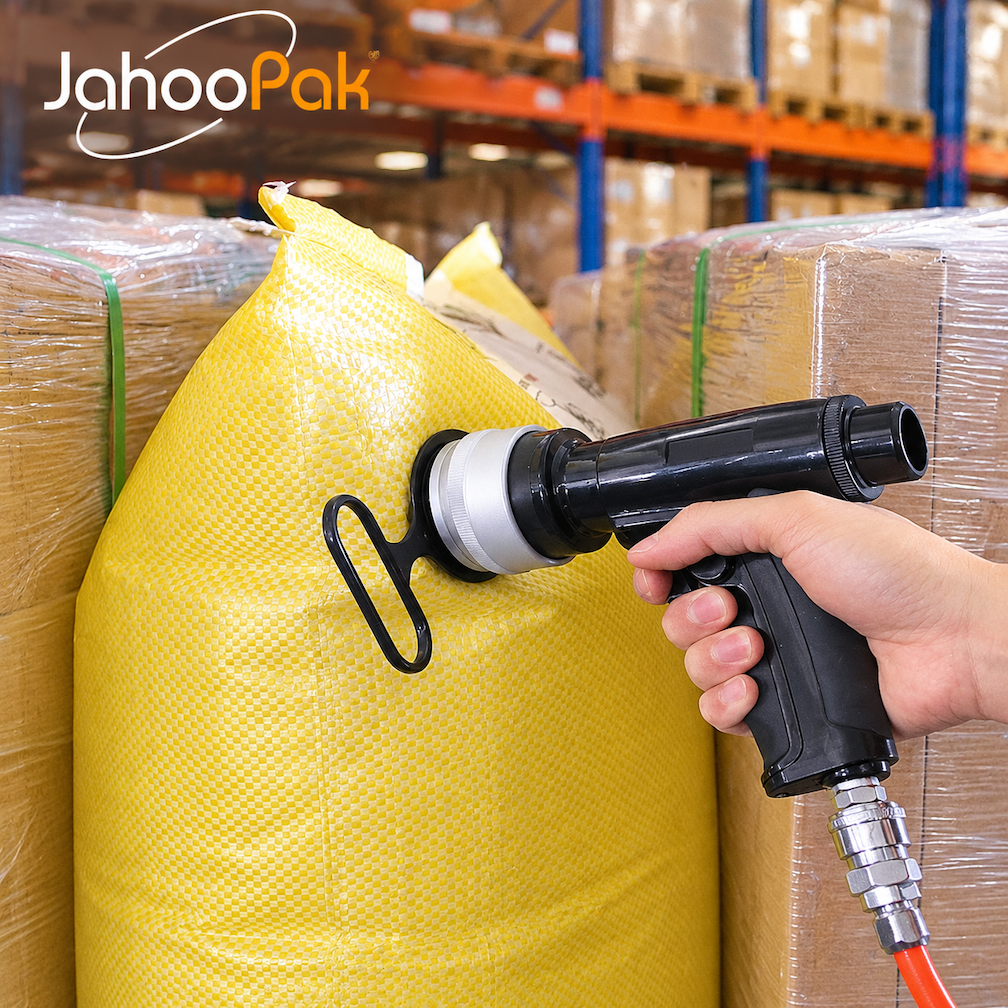
Align the nozzle of inflate gun to the bag valve. Push and lock the nozzle for tight connection. Confirm your air compressor is set within product recommended working pressure. Use matching inflator for traditional valve or ProAir large valve.
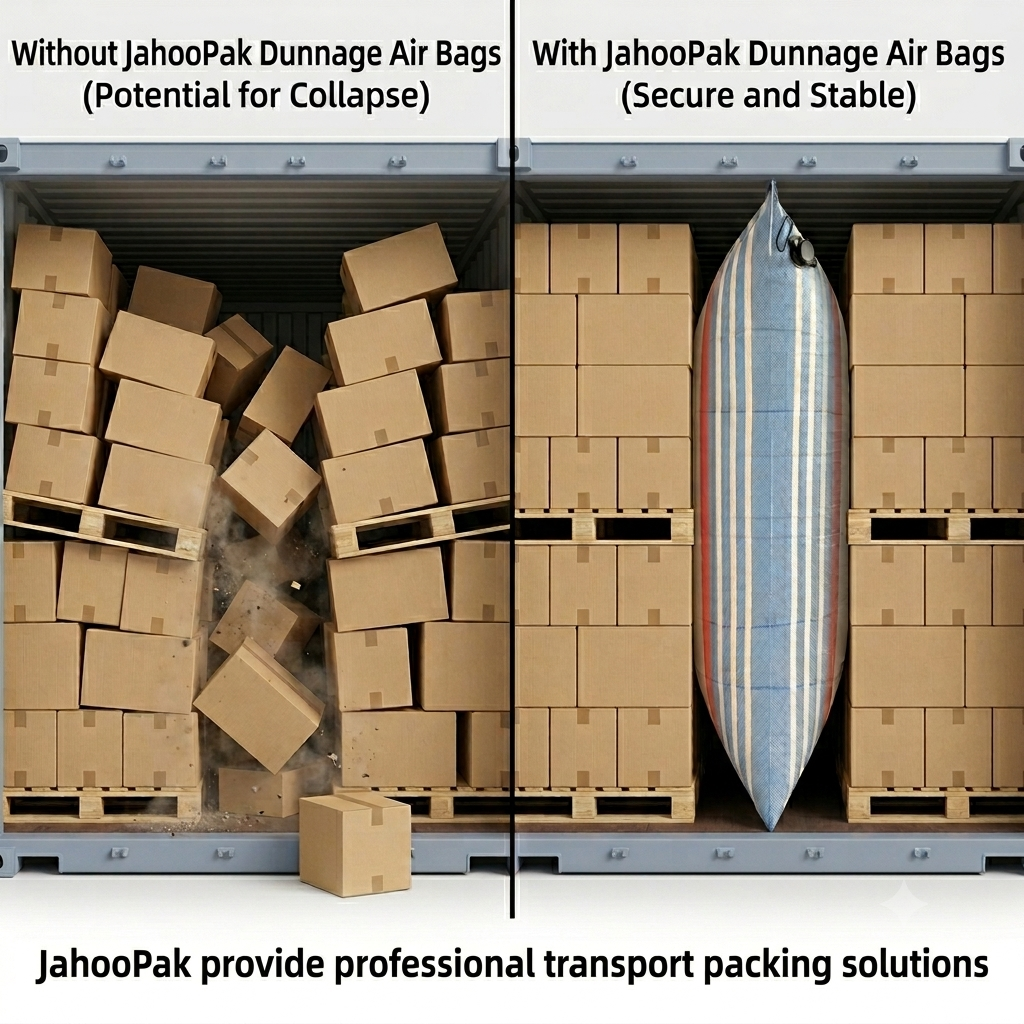
Start inflation slowly. Stop pumping air once the bag fills the whole gap and holds cargo firmly. Manually touch the bag surface to verify firm status. Do not over inflate. Excessive pressure will cause bag burst risk.
Push loaded cargo gently to test whether goods are locked without shifting. If cargo still moves slightly add a small amount of air. Recheck valve position to ensure no air leakage before container door closing.
Deflation Steps for Reusable PP Woven Dunnage Air Bag
Popular size:
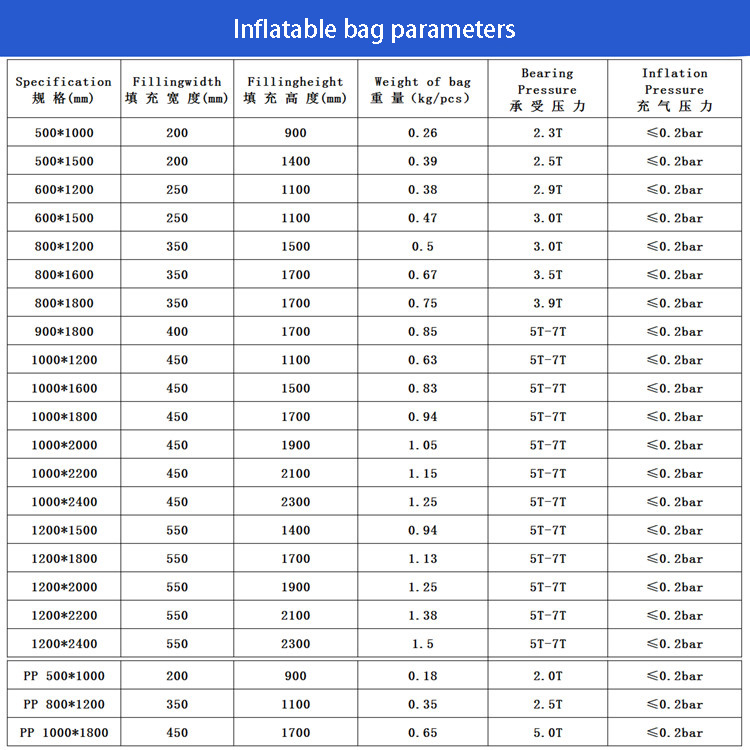
This parameter table covers mainstream specifications of kraft paper dunnage bags and PP woven dunnage bags. Each size is marked with clear filling width and filling height. These two data guide you to select suitable bags according to the gap between cargo. The filling width means the maximum gap the bag can fill after inflation. The filling height refers to the available vertical height to match your cargo stack. Improper size selection will lead to unstable cargo or bag burst risk. All standard sizes follow unified inflation pressure requirement which is less than or equal to 0.2 bar. You can check the bag weight and bearing pressure at the same time to judge whether it fits your loading weight.
Different Levels:
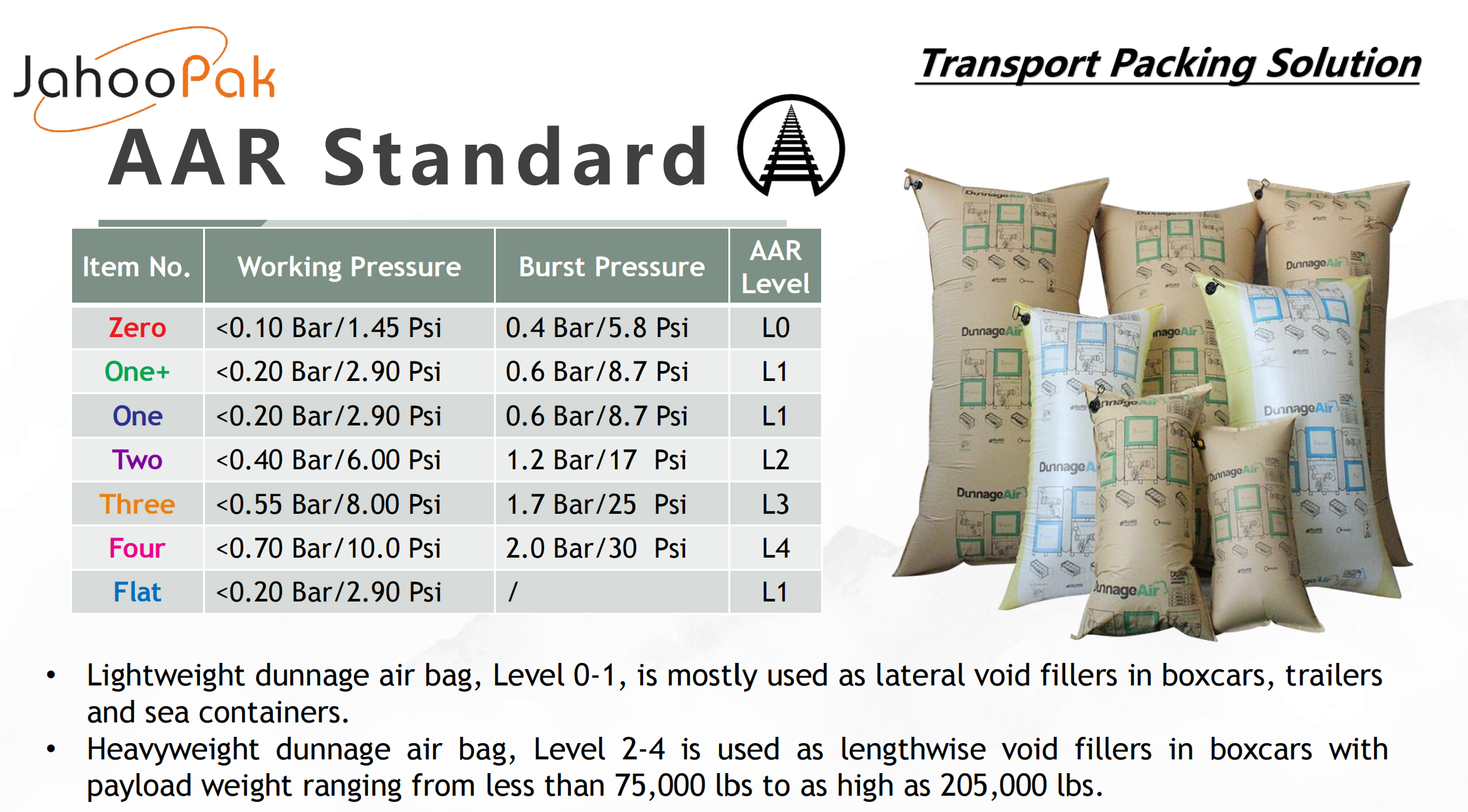
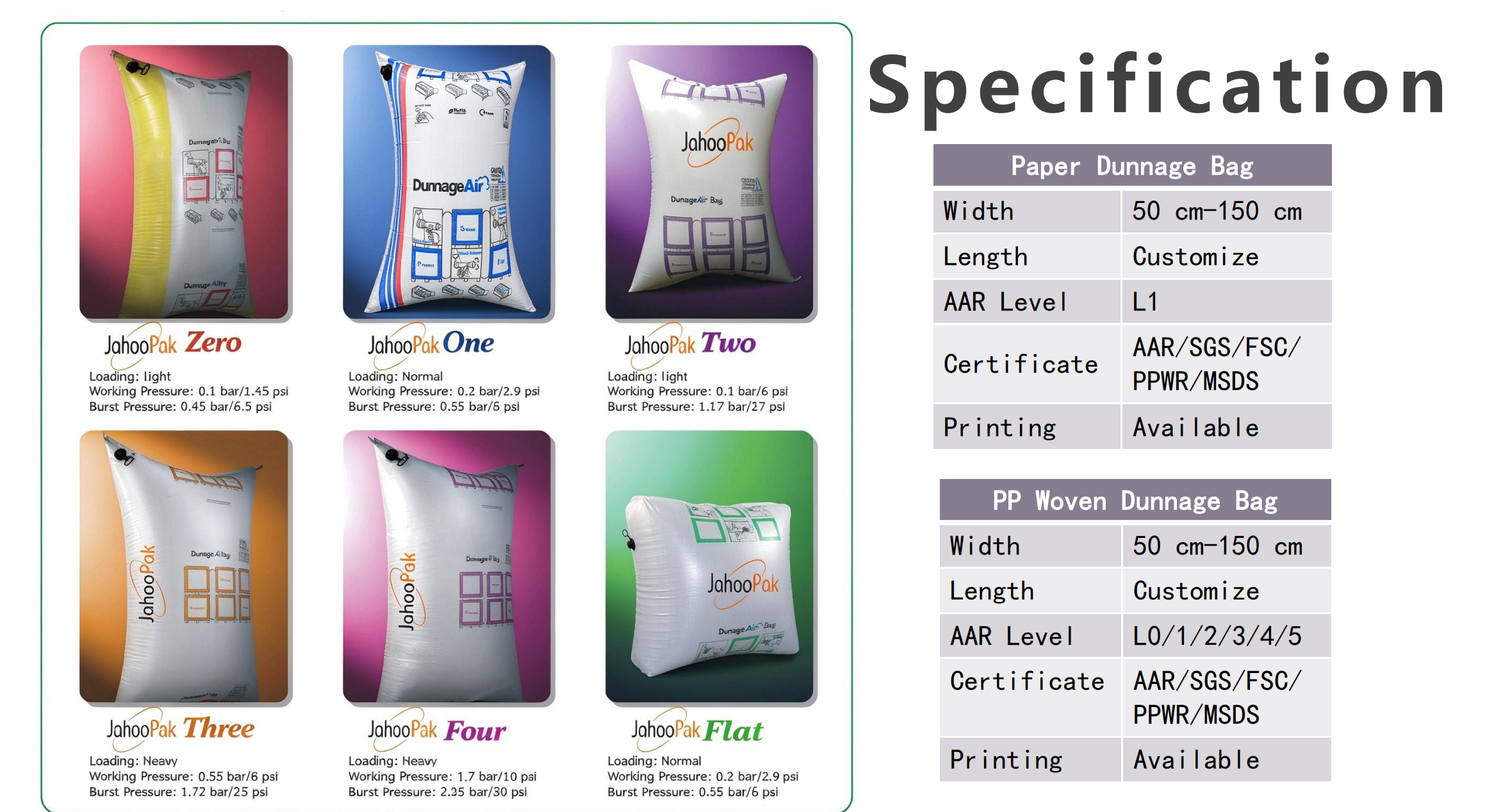
AAR standard is the core rule for dunnage air bags used in rail and container transport. AAR level directly defines the working pressure and burst pressure of each bag grade. Our Zero grade belongs to L0 level with working pressure below 0.10 bar and burst pressure at 0.4 bar. One+ and One grade belong to L1, their working pressure is less than 0.20 bar and burst pressure reaches 0.6 bar. Two grade is L2, Three grade is L3 and Four grade is L4. Flat grade is classified as L1 for normal loading. Every grade has clear pressure limit to guide safe use in different transport conditions.
Specification:
We have two main categories of dunnage air bags, kraft paper dunnage bags and PP woven dunnage bags. Each category covers multiple grades for different loading weight. Paper bags include Zero, One, Two, Three and Four grades. They are mostly for single use export shipments. PP woven bags can be reused many times and cover a wider AAR level range from L0 to L5. The width range for both types is 50 cm to 150 cm. Length can be customized based on your actual gap size. All products pass strict certification tests such as AAR SGS FSC PPWR and MSDS. Custom printing service is available, you can add your brand logo or shipping marks on bag surface.
Scene Image
Products categories
-

Jahoopak Pp Woven Air Bag Lightweight Yet High ...
-

JahooPak Kraft Paper Dunnage Air Bag Inflatable...
-

PP Air Dunnage Bag Fill Voids in 20ft or 40ft H...
-

Stock Reusable Container Air Cushion Bag 50*150...
-

High Quality Brown Kraft Paper Dunnage Air Bag ...
-

Quick Inflation PP Woven Air Bag with One Way C...


