
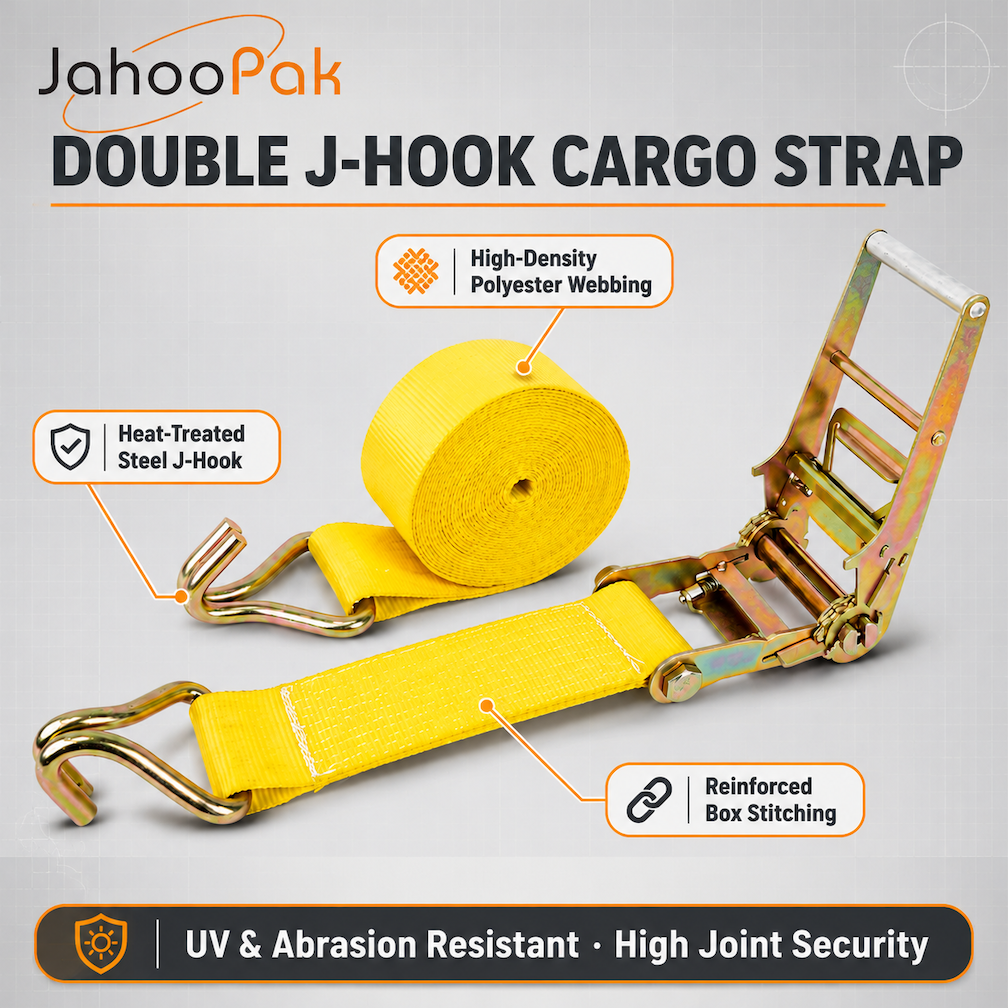
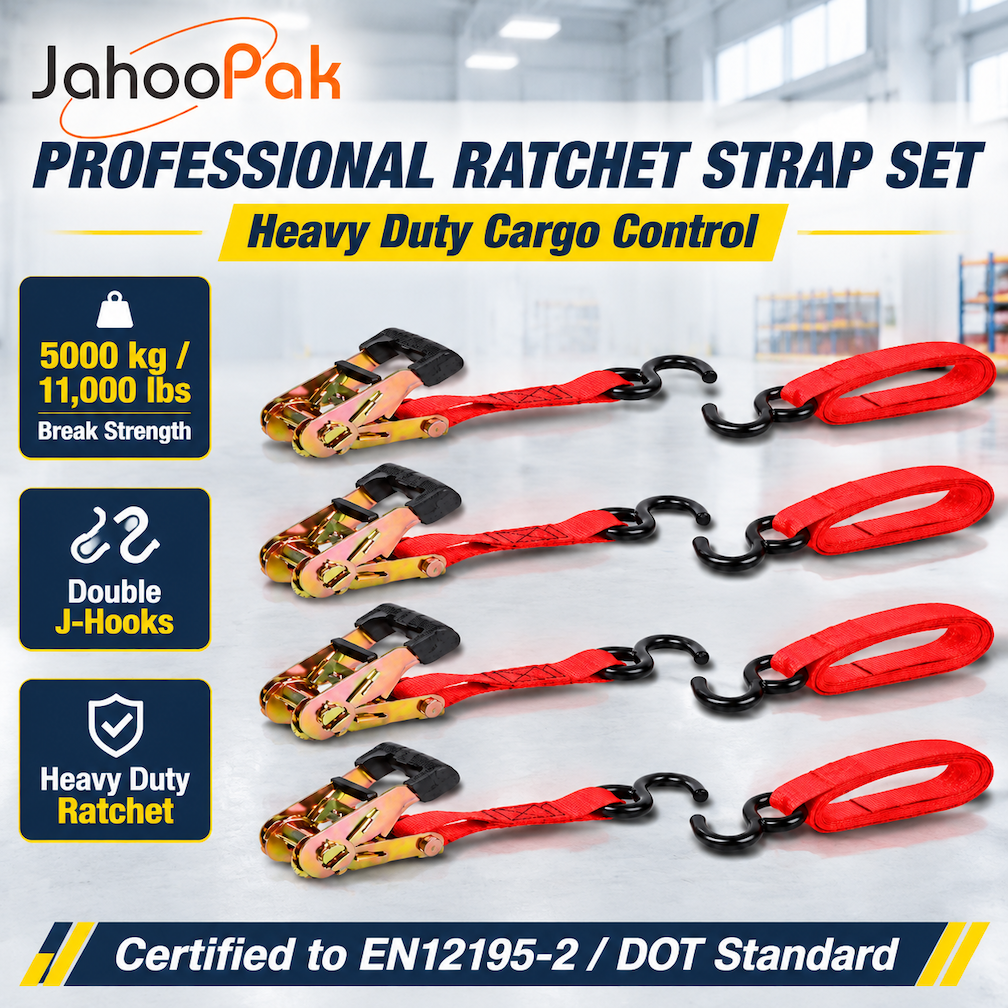
- ✔ One graded strap replaces two unrated straps on the same anchor point
- ✔ Roll supply at 200 to 250 m cuts cut-length waste on fleet fitting programmes
- ✔ Replacement buckle bodies and hooks extend life instead of scrapping assemblies
- ✔ Rubber grip handle raises tension per pull and reduces crew hand fatigue
- ✔ Clear grade marking shortens inspection time at pre-trip checks
- ✔ Low creep webbing holds tension longer, so fewer roadside re-tension stops
- ✔ Consistent cut length speeds up kitting and packing on your side
- ✔ Buckle release lever works with gloves, cutting unloading time per trailer
- ✔ Colour coding by grade lets a crew pick the right strap without reading labels
- ✔ Fewer strap failures means fewer cargo claims and lower insurance exposure
JahooPak Ratchet Tie Down Specification
MBS is the maximum breaking strength of the webbing itself, measured on a new sample pulled to destruction in a tensile machine. It describes the textile, not the finished strap, and it is never a working limit. SBS is the system break strength of the assembled lashing: webbing plus buckle plus hooks plus stitching, tested as one unit. SBS is always the lower of the two, because the assembly fails at its weakest joint. On the 40 mm orange line here, webbing MBS is 11000 lbs while the assembled SBS is 8500 daN, quoted as 19100 lbf; convert both figures into one unit system before you compare grades, or the comparison will flatter the webbing.
MSL, the maximum working load, is the number to plan with. It is set at half of SBS on these lines: 6000 daN SBS gives 3000 daN MSL, 8500 daN SBS gives 4250 daN MSL. A factor of two covers wear, edge loading, UV ageing and the fact that a driver cannot judge tension by eye. Fitting strength at 75 percent of MBS is the fourth figure, and it tells you what the hook and the sewn loop keep. Where 7700 lbs MBS meets 5775 lbs fitting strength, the strap keeps three quarters of the webbing figure at the ends — a good assembly, and one you can verify with a calculator rather than a claim.
Selection then runs in a fixed order. Start with cargo weight and the number of lashings, remember that a strap at 45 degrees contributes only about seventy percent of its rating in the horizontal direction while pulling the load down, then choose the smallest strap whose MSL covers the share of load per lashing. Use AAR501 grades as the filter: Grade 4 for light trailers and 32 mm retail work, Grade 5 where 32 mm straps must carry rated loads, Grade 6 and Grade 7 for 40 mm heavy flatbed and machinery work. Finally match the hardware: 1-1/16 in buckles for light duty, 1.5 in RB3801 to RB3804 for 3000 kg / 6600 lbs service, and 2 in / 50 mm series at 5000 daN break for the heaviest deck loads. Do not mix a Grade 7 webbing with a light buckle; the assembly is only as strong as the cheapest part on the load path.
| Width | Length | Color | MBS | Joint Strength | System Strength | Max Securing Load | Certificate |
|---|---|---|---|---|---|---|---|
| 32 mm | 250 m | White | 4200 lbs | 3150 lbs | 4000 daN / 9000 lbF | 2000 daN / 4500 lbF | AAR L5 |
| 230 m | 3285 lbs | 2464 lbs | - | - | AAR L4 | ||
| 40 mm | 200 m | 7700 lbs | 5775 lbs | 6000 daN / 6740 lbF | 3000 daN / 6750 lbF | AAR L6 | |
| Orange | 11000 lbs | 8250 lbs | 4250 daN / 9550 lbF | 4250 daN / 9550 lbF | AAR L7 |
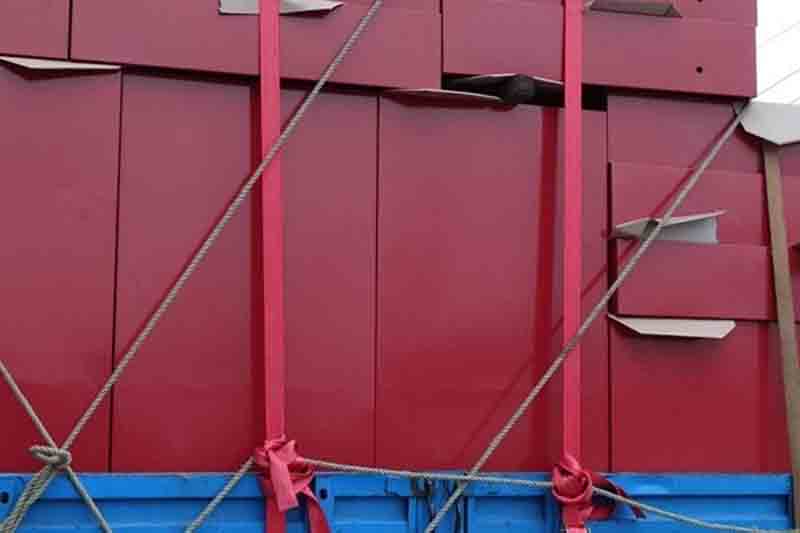
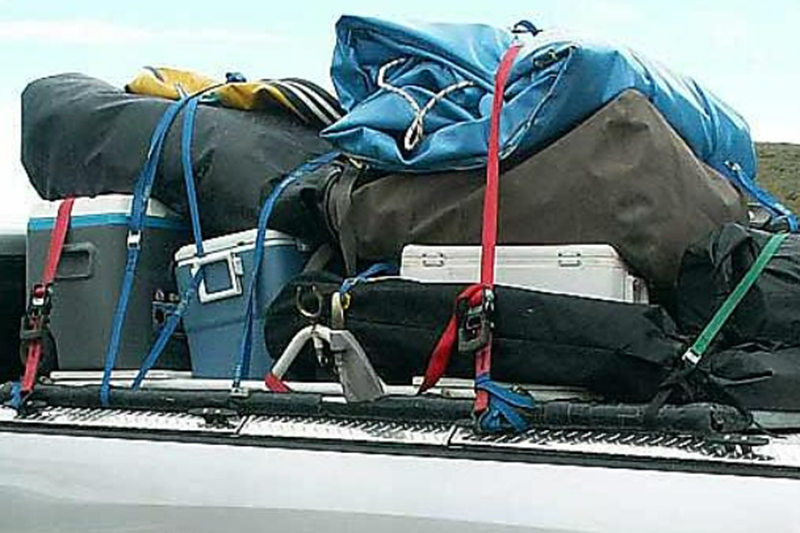
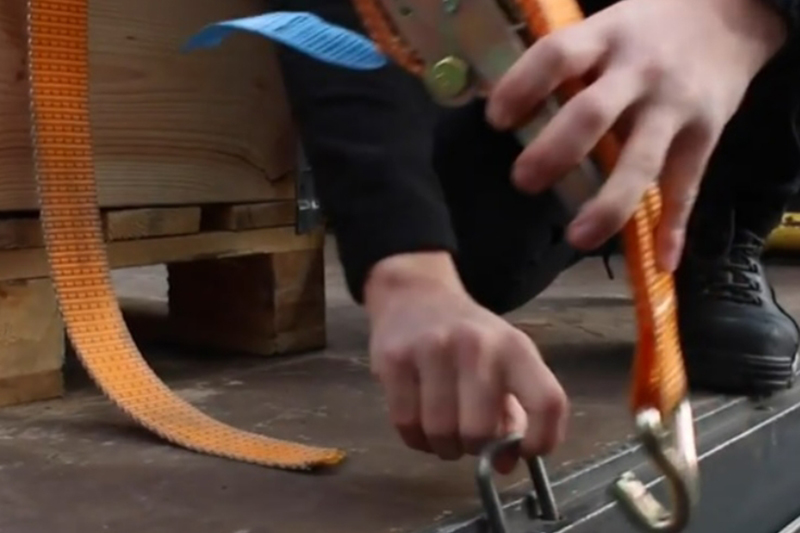
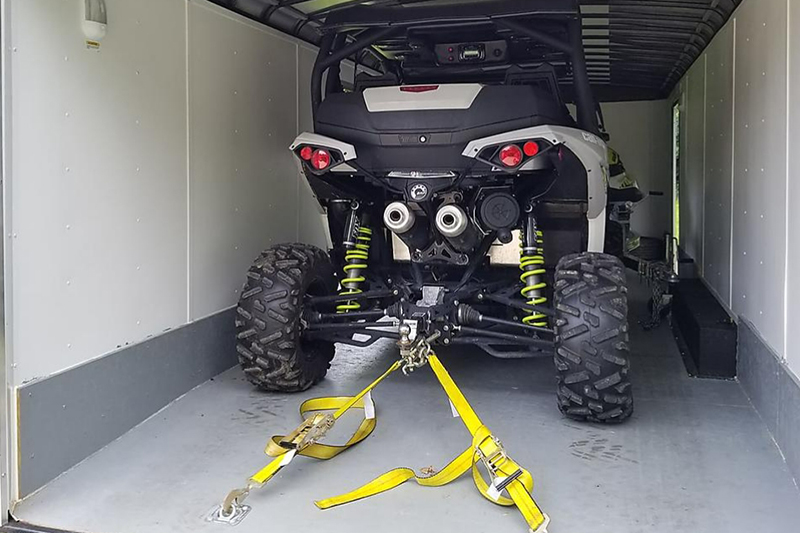
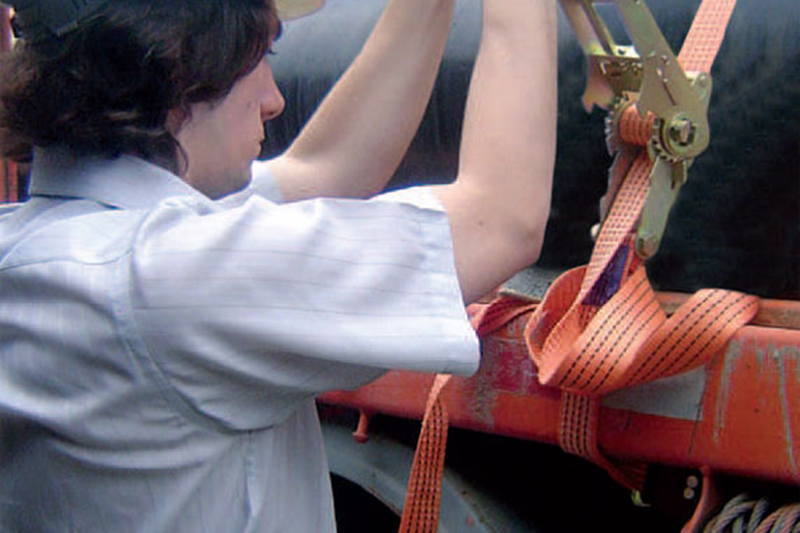
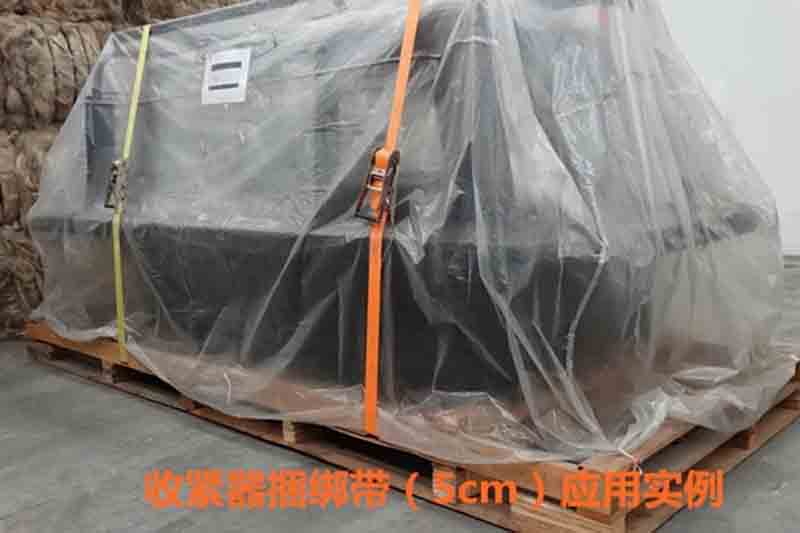
JahooPak Strap Band Application
Products categories
-

Container Void Fill Kraft Paper air Inflator Du...
-

Durability and Versatility of Composite Cord St...
-

Food-Grade Plastic Slip Sheet – Hygienic &...
-

Reinforced Polypropylene Strapping Band with Lo...
-

2025 Top Rated Models 90*120CM Durable Pp Woven...
-

High Quality V Cut Pallet Edge Cardboard Angles...


